


Means and Ends In War
On War’s famous first chapter includes Clausewitz’s clearest comment on the subject of ending wars:
If we want our opponent to fulfill our will, we must therefore put him in a position that is more harmful than the sacrifice which we demand from him; the harmfulness of this position must, of course, at least not appear to be temporary, otherwise our opponent would wait for a better time and not give in. Each change that could be produced through continuing military action must lead to an even more harmful position, at least in theory.
Here, however, Clausewitz is talking in terms of theory and mere concepts. He goes on to say that in reality, this question is addressed by estimations of probabilities, not absolutes. These absolutes are helpful in showing the mechanism by which actions occur, such as what it is that compels a belligerent to fulfill another’s demands (pain, and the prospect of a yet worse situation). This first chapter deals with war primarily as a mere concept, before determining the effects of the real world upon these pure ideas. The second chapter relates to means and ends in real war and so provides concepts that can be more readily applied to the ongoing Iran war.
War in the abstract means a fight to the utter defeat, or overthrow, of the enemy. War in the real world, however, is a subordinate tool of policy—it is created from political circumstances and exists for the sake of political goals. In this way, limited war is possible. One reason for this is, as Clausewitz phrases it, is: “...the value of the object [the war is fought over] determines the measure of the sacrifices with which it is to be purchased.” Which means the value both sides place on whatever it is they are fighting over determines the lengths to which they’ll go to obtain or deny it. A lesser objective will call forth lesser efforts.
He describes the result of this dynamic: “We see, therefore, that in wars in which one side cannot completely disarm the other, the motives to peace will rise and fall on both sides according to the probability of future success and expenditure of force required.”1 Which is to say, the willingness of either side to come to a negotiated settlement depends on how likely continuing the war will lead them to a more favorable position and by how much effort they anticipate that would cost them. From this, we may see how many real war can be limited and conclude well-before either side is anywhere near helplessness, despite all that Chapter 1 established about the escalatory nature of war.
The conclusion of wars is also addressed here in this second chapter: “If [the motives for peace] were equally strong on both sides, they would meet in the middle of their political difference…” But Clausewitz goes on to say that no equivalence is needed for both sides to make peace, “As long as the sum of them added together is sufficient, peace will result, but naturally to the advantage of the side that has the weakest motives thereto.”2 Thus, the aversion to the costs and odds of continuing the war can be unequally distributed, but still produce peace, with the settlement being the more favorable to the side that needs peace less. An assessment of probabilities and effort can induce an agreement to peace, despite there being no significant fighting or decisive battles, as has been the case in many real wars. Thus, Clausewitz writes, “the original political intentions change very much in the course of the war, because they are partly determined by the successes and the probable results.” As we will see, this has implications for the strategic conduct of war, which no longer aims at the overthrow of the enemy, but the influencing of the enemy’s assessment of the likely progress of the war.
Changing the Odds
Chapter 1 compares war to a game of cards. But it is a game where no symmetry can be assumed—the decks are stacked, so to speak. Each player does not know for certain what cards his opponent has, and can really only clarify his view by playing the game i.e. waging war. Yet, just as a card game may involve real money, and so be subject to a system external to itself (in the sense that the players have a concern beyond winning, namely preserving their cash for other purposes), war is subject to politics. If a player suspects his opponent has the deck more in his favor than he first supposed, he may give up on seeking victory, and instead merely try to extricate himself at as low cost as possible. But his expenditure and appetite depends not just on the odds, but the kind of odds he’s willing to accept based on his personality and circumstances. The gambler with little cash may play more conservatively than someone with more wealth than he could possibly lose, but he also may play more aggressively if loan sharks await him outside the room.
In the kind of gamble that war’s subjective nature makes it, war, in most cases, no longer concerns itself with the utter overthrow of the enemy, but rather with changing the odds or—more precisely—the opponent’s perception of them. Clausewitz describes two primary means for influencing the enemy’s view of the prospect of success. The first of these is the destruction of the enemy’s forces and the occupation of his territory, similar to a war aimed at his total overthrow. However, Clausewitz notes that this will be carried out in a markedly different manner, since trying to totally defeat the enemy is very different from trying to just achieve enough to change his calculus of the odds, so that he would prefer to make peace than to carry on the fight. In practice, with outcomes a matter of probability, it is often sufficient for the goal of military action to be merely the shaking of an enemy’s confidence, so that the future looks unhopeful and he is willing to accede to our demands rather than face it. Whether this is possible and what victory is required to achieve what aims will naturally depend on the political situation and the nature of the demands.
The other means for accomplishing this are “such enterprises as have an immediate bearing upon policy.” Clausewitz describes his meaning very clearly, even providing examples:
If there are any enterprises which are particularly suited to breaking up the enemy’s alliances or winning new allies for ourselves, to stimulating political activities in our favor, and so forth, then it is easy to conceive how much these can increase the probability of success and become a much shorter way to our object than the defeat of the enemy’s armed forces.
This is quite far from Clausewitz as he is often stereotyped: as the prophet of decisive battle. Indeed, besides these, Clausewitz names three special means by which the enemy’s expenditure of forces can be increased, and the “price of success” increased. The first is by what he calls Invasion, though by this he does not mean it in the conventional sense of the word. Rather, he defines it as “the occupation of the enemy’s territory, not with a view of keeping it, but in order to levy contributions upon it or even to devastate it. The immediate object is neither the conquest of the enemy territory nor the defeat of his armed forces, but merely to do him damage in a general way.”3
Another method of increasing the enemy’s costs is by prioritizing doing harm over maximizing the chances of defeating the enemy in battle. He argues that while maximizing the chances of defeating the enemy would seem to be the more “military” choice (and maximizing pain the more political) “from the highest point of view, both are equally military, and each only effective if it suits the given conditions.” To aim at inflicting a defeat on the enemy in battle would reduce his military means, but this remains a political goal, and is only called for in certain political circumstances. That is to say, all military action depends on the political circumstances, and so must be judged by the political outcomes sought. What is necessary in one case would in another be disproportionate in risk or cost to the aim.
“The third way, by far the most important from the number of cases to which it applies, is the wearing out [Ermüden, tiring or fatiguing] of the enemy… The idea of wearing out in a long struggle implies a gradual exhaustion of the physical powers and the will by the long continuance of action.” Clausewitz chooses to illustrate this point with the example of Prussia in the Seven Years’ War:
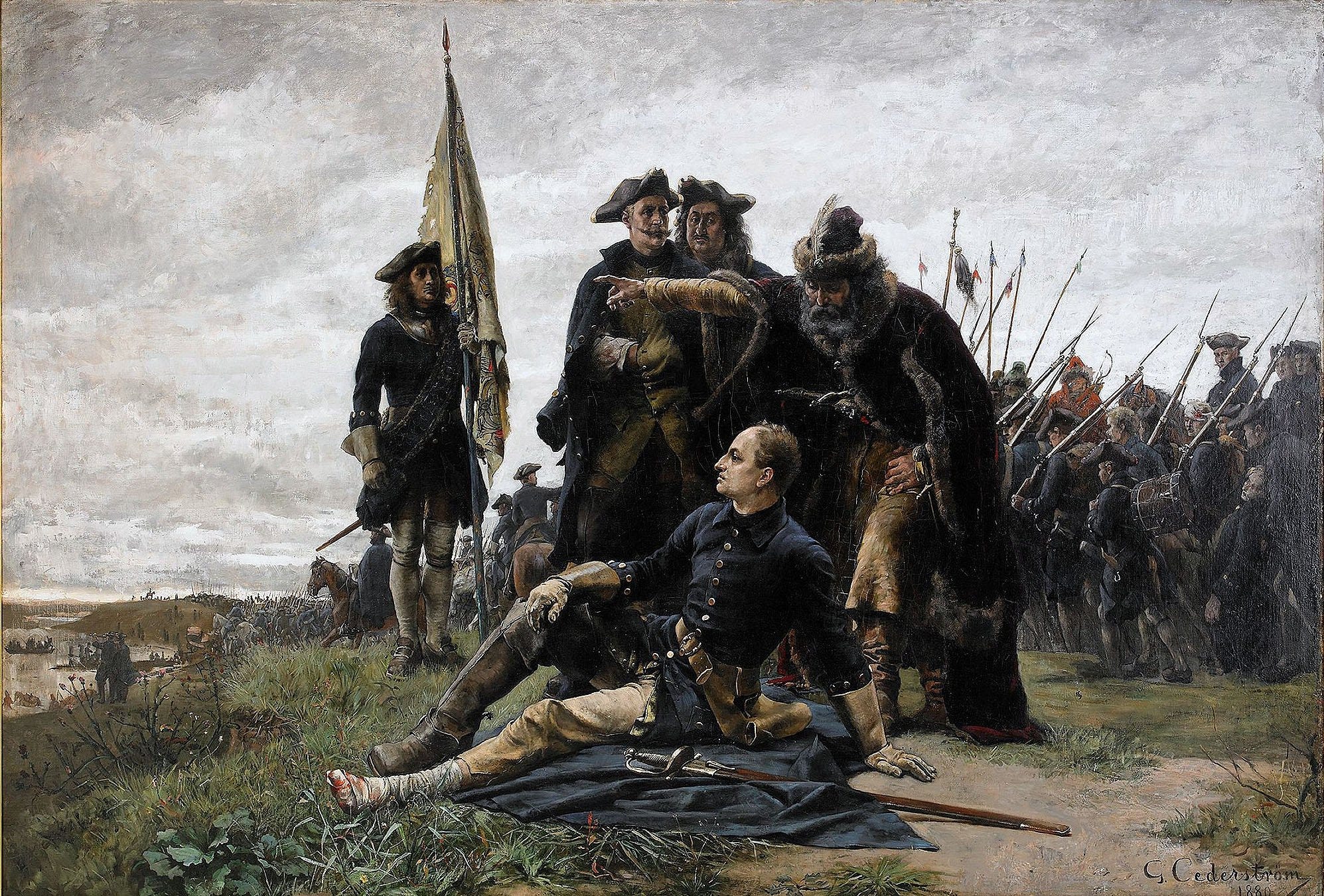
Frederick the Great in the Seven Years’ War would never have been in a position to defeat the Austrian monarchy, and if he tried to after the fashion of a Charles XII,4 he would inevitably have been brought to ruin. But after his skillful use of a wise economy of his forces had for seven years shown the powers allied against him that the expenditure of forces on their side would far exceed what they had at first imagined, they made peace.
In this kind of defensive strategy, the aim is to convince the aggressor that what he wants is simply not worth the price. The means of doing so is by demonstrating that the cost of attaining his goal is higher than he had anticipated when he undertook the war, which makes peace on lesser (if not unfavorable) terms a preferable alternative to its continuation. A state may have the sheer strength to accomplish its aims, but war is part of political business—whether it’s worthwhile to actually do so is a separate question entirely. Therefore, even a greatly unequal contest of strength may end in favor of the weaker party, since he need not be able to even ultimately threaten the defeat his opponent, but only to ensure the costs of his conquest would be uneconomical.
In summation, Clausewitz writes:
When political objects are unimportant, motives slight, and the tension of the forces small, a cautious commander may skillfully try all sorts of ways by which, without great crises or bloody solutions, he may twist himself into a peace through the characteristic weaknesses of his opponent in the field and in the cabinet.5
However, cautions that it must always be remembered that the true nature of war has the destruction of the enemy as its highest law, to which either side may appeal (if circumstances do not hinder them), forcing a response in kind. Mistaking an enemy bent on destruction for one that can be dissuaded is a mistake that is often ruinous.
Theory and Practice
For Clausewitz, the inherent strength in the nature of the defensive was in awaiting the moment in which the balance of force permitted the return to the offensive, its transformation into the “flashing sword of vengeance.” Exhaustion and delay were components of defensive fighting, but only as means to the end of defeating the enemy in a decisive battle. This end need not actually be reached, but the very threat of the counter-attack was where the defensive derived its power. That is to say, an attacker can be induced to make peace when his forces are exhausted not because they are exhausted, but because their exhaustion makes them vulnerable to defeat in battle, and the danger of this compels a peace settlement. Clausewitz considers political exhaustion as something else entirely, which can’t be considered a tendency of war itself, but a characteristic of certain kinds of war—the half-hearted ones.
It is in some respects odd to call the intensive bombing campaign over Iran “half-hearted,” in light of the destruction and even the rhetoric involved. War is by it nature a deadly business, even for the least of wars. In this case, at-most one of the belligerents considers the war a matter of life-and-death, and this one lacks the means to force the other side to escalate the war. Iran’s primary enemies (Israel and the United States) lack a land border with it, and lack the motives for a ground invasion (whereas Iran lacks the means to force such a war upon them). This war, despite its rhetoric, is therefore fundamentally limited in the sense that Clausewitz meant it.
Certainly, the Iranian regime has at least as much invested in winning the war as Frederick the Great did in the Seven Years’ War, but neither has/had the capacity or opportunity to escalate matters to confrontation of whole nation against whole nation. Iran simply lacks the military means to force decisive battle on its enemies, whereas its enemies (even if they strictly have the means) lack the will and inclination to assume the risks of decisive battle, and are instead using lesser means to pursue lesser objectives.
While we would hardly see the tensions between Iran and the states opposing it as “small,” the motives as “slight,” or the political objects as “unimportant,” they can be counted as such in comparison to the life-or-death struggle of nations that states can embroil themselves in. In the kind of “fight to the finish” that was characteristic of the Napoleonic Wars (and reached its apex in the world wars), simply drawing things out was not enough; unless the attacker lost their superiority (becoming vulnerable to counterattack) they would continue to have the means and motive to attempt to destroy the defender utterly. Frederick the Great was able to take advantage of the half-hearted character of war in that time, allowing him to wait for the political exhaustion of his enemies to deliver him from their numerical superiority. It is only in cases where the aims of the war are limited that this kind of exhaustion (rather than ultimate destruction) can be the aim of the defender.
It is only in the eighth chapter of Book VIII that Clausewitz addresses the plan of a war in the case of “Limited-Aim Defense.”6 Here, he writes, “The ultimate aim of a defensive war can never be an absolute negation… Even for the weakest there must be something by means of which he can hurt his opponent and threaten him.” Keeping in mind what was established in Book I Ch. 2, the aim for each side is to influence the perceived probability of positive developments for the other, so that prospects seem poor enough that the opponent would prefer to pay the price needed to terminate the war.
As history shows us, this is not an absolute process, but rather both sides modify their demands as they perceive their prospects changing. Countless wars have ended after one side, despite having gained an advantage, nevertheless chooses to give up on pursuing their original aim and makes do with something lesser, sometimes even nothing at all; this occurs when the attacker deems the probability of success lower than he had guessed when first undertaking the war or the cost of attaining his aim higher than he supposed. The reciprocal of this, of course, is that unexpected opportunities (often spurred by victory in battle) often lead to an attacker seeking gains beyond his original target.
War for the Weak
Particularly useful for our purposes is what Clausewitz writes of the greatly inferior defender: “in case his weakness does not permit him to consider any important counter-stroke,” his aim is “an alteration of the circumstances, an improvement of the situation… this improvement from without can be nothing else than a change in political relations; either new alliances spring up in favor of the defender or old ones directed against him collapse.” When this is so, “the defender tries to keep possession of his own country as long as possible, because in that way he gains the most time, and gaining time is the only way to his aim.”
In this the limitations of a work written in the early 1800s may be noticeable: Clausewitz does not address the possibility of an air campaign, which does not attempt to seize territory. However, his description of the aims of a defender too weak to contemplate a counter-attack provides a suggestion as to why airpower alone has so little coercive power: it cannot deprive a state of its territory, nor threaten to do so; so long as a state has its territory, it has the means to generate new forces, to a lesser or greater extent depending on how devastated the territory is.
In any case, the core assertions remain valid. The ultimate aim of the defender must be to inflict a defeat (or damage, in the case of a limited war) on the attacker, which is enabled by the exploitation of inherent advantages of the defensive, which can create a more favorable balance of forces. Where the overall imbalance of forces is so great that this cannot be done, the only thing left is to play for time, since time not only weakens the attacker more than the defender (provided the attacker has not occupied the parts of the country the defender needs to sustain himself), but time also provides the opportunity for political circumstances to shift, which may entirely alter the balance of forces.
What we see in Book VIII, Ch. 8 then, is the reciprocal of Clausewitz’s better known comments in Book I, Ch. 1: if the defender sees the harmfulness of his position as temporary, he knows he can get a better outcome (even if it’s still unfavorable) by waiting. We may apply this quite easily to the war with Iran: so long as Iran sees the current harmfulness of the situation as temporary, there is little incentive to come to terms. In immediate terms, this means Iran is unlikely to feel compelled to negotiate until the coalition’s stockpiles have been further depleted. The nature of the bombing campaign is such that its intensity is limited by munitions stocks, and so its intensity will abate—hardly the threat of an ever-more harmful position. This is particularly acute when it comes to interceptors. Iran’s capacity to strike is being reduced, but this is not occurring as quickly as the coalition’s capacity to defend against these strikes is being reduced. The harm the coalition can inflict on Iran was largely front-loaded, whereas Iran’s capacity to harm takes time to be effective, both in terms of economic pain and in wearing down interceptor stockpiles.
Yet, this is not the end of the story. Political factors must be taken into account on both sides. Even considering the limitations of stockpiles, continual bombing at whatever level can be sustained by the coalition is still a harmful position for Iran. The question remains: what sacrifice is likely to be demanded of Iran? Likewise, what might Iran be willing to sacrifice in exchange for extricating itself from the painful position of constant bombing? It is in light of these aims that the pressure each side applies to the other must be considered.
Factors of the Will
As addressed in Book I, Ch. 1, part of the capacity for resistance depends on the will, which cannot be quantified, only judged. The strength of the will is also directly modified by the political circumstances. For Iran, this means both domestic politics, as well as the international situation. In international terms, this means the solidity of the coalition they find opposing them. If they believe it is likely members will peel off, that will be a strengthening factor to the will, just as the belief that members will join or intensify their involvement weakens the will to resist.
In domestic terms, if an uprising (whether separatist or popular) is greatly feared, that may be sufficient for Iran to take a bad deal—the prospect of dealing with such a scenario amidst a bombing campaign would be the “even more harmful position” that makes the sacrifice appealing. Likewise, a leadership vacuum may produce a power struggle, which would incentivize a swift settlement. However, political circumstances can also strengthen the will to resist. This of course includes the reciprocal of the aforementioned (if the population is understood to be compliant or loyal, the leadership firmly consolidated), but also includes the emotional element. As Clausewitz says in his first chapter, since wars are waged by humans, the heart is always involved, even if its influence relative to the mind varies. Iran’s leadership is highly ideological, but it is far from entirely insensitive to raison d’état.
Rather than speculate on Iran’s internal politics, we may instead note some factors that produce or accent pressure. The history of mass protests in Iran that ended in violent repression makes the degradation of Iranian state capacity a factor. The economic weakness of Iran is also a factor, as is the shortage of water, in consideration of the popular discontent this has produced. The death of the ayatollah has undermined the balance of power within the regime and the consolidation of power is likely to be hindered by the continuation of the war. This is all to say, prolonging the war may increase the pressure on the coalition to come to terms favorable to Iran, but it is not a given that this will outweigh Iran’s own need for peace as the war drags on.
Thus, it must be noted that both Iran and the US have the incentive to present their will to prosecute this war indefinitely as infinite, regardless of their real disposition. This is for the same reason that both parties in a negotiation are incentivized to at least pretend to be willing to walk away. Both sides evaluate what they are willing to offer in exchange for peace based not just on the actual situation, but on the basis of how they expect it to develop.
A yet larger question is whether this should be considered a discrete war, or merely an intensive campaign within an existing one. War, as Clausewitz defines it, has nothing to do with questions of a formal declaration or legal status, but of the use of violent means towards political goals against an opposing force. A glance at the history of war reveals a number of wars that have lasted years or decades, containing only intermittent periods of energetic activity. If the aim of this campaign is not peace, but merely to gain a stronger position from which to continue to wage a protracted struggle, the actions within it will have to be judged in light of that goal.
This is to say, it matters greatly whether the aim of the coalition is to coerce Iran into giving up the idea of projecting power via proxies and pursuing nuclear weapons or whether the aim is merely to reduce their abilities to do so (or to defend against future strikes). Likewise, it must be asked whether Iran hopes to merely endure and continue its campaign of supporting proxies and/or pursuing nuclear enrichment or whether it hopes to secure a peace deal to protect these interests.
Post-Script on The Relationship Between War and Policy
“It is only when policy promises itself a wrong effect from certain military means and measures, an effect opposed to their nature, that it can exercise a harmful effect on war by the course it prescribes.”
From this passage, one might gather that the Iran war constitutes a blunder in which policy has promised itself a wrong effect from certain military means and measures. This may be true in a certain sense, but this is not what Clausewitz is addressing here. The subject here is whether policy can have a negative effect on the conduct of war. The only case Clausewitz argues this is possible is when policy tries to achieve something with military means that are intrinsically incompatible with its aim e.g. having an army support itself by foraging in barren country, ordering forces to move distances that are impossible. He compares it to the way someone who hasn’t fully mastered a foreign language might misspeak.
What Clausewitz is not talking about is an erroneous assessment of the political effects of a particular military act. Policy has the right to take all sorts of risks, even foolish ones. Whether or not bombing the Iranian regime can cause it to collapse, or give in, is ultimately a judgment of probabilities, which is the hard task of war—the essence of the strategic problem on the level that touches policy. In cases such as these, as he says, “It is not [the influence of policy], but the policy itself which should be found fault with.” Misjudging an opponent and the kind of pressure required to compel him into acquiescence is a failure of policy, not an example of malign influence.
An instance of this failed judgment is in Napoleon’s 1812 invasion of Russia. Clausewitz argues his primary fault was misjudging the impact of taking Moscow on the Tsar. Had Napoleon been right that this would force the Tsar to come to terms, the campaign strategy would have been sound. The political effects of any action are always a matter of probability, but Clausewitz argued that Napoleon had deceived himself as to the probability of this action having the desired political effect upon his enemy. How this parallels the current situation needs no explanation.
On War, Book I, Ch. 2, 284. (Page numbers refer to the Jolles translation in the Book of War edition).
Ibid., 286.
Ibid., 287.
Charles XII of Sweden was king during the Great Northern War (1700-1721). A talented military leader, he achieved a number of notable victories, but chose to invade Russia rather than conclude a peace, whereupon his army was annihilated following the Battle of Poltava, leading to the end of Sweden’s tenure as a great power.
Ibid., 295.
Book VIII Ch. 8, 944.
A well-thought piece, thank you!
Thank you