


“Their word for themselves was People. Early seventeenth-century common soldiers were Die Leute, Das Volk, les gens, or la gente. They were Das Kriegsvolk, Die Kriegsleute, les gens de guerre, the War People.” So begins Lucian Staiano-Daniels’s aptly titled The War People: A Social History of Common Soldiers during the Era of the Thirty Years War.1 Using the technique of micro-history, Staiano-Daniels follows the Mansfeld regiment from its raising in 1625 to its unhappy dissolution in 1627. This unexceptional regiment is notable because of the primary source documentation that survives, specifically its original internal legal records—investigations, debts, trials, and last testaments. Through this unusually immediate resource, we gain glimpses of the reality of the 17th century common soldier and so a clearer view of the social conditions he lived within.
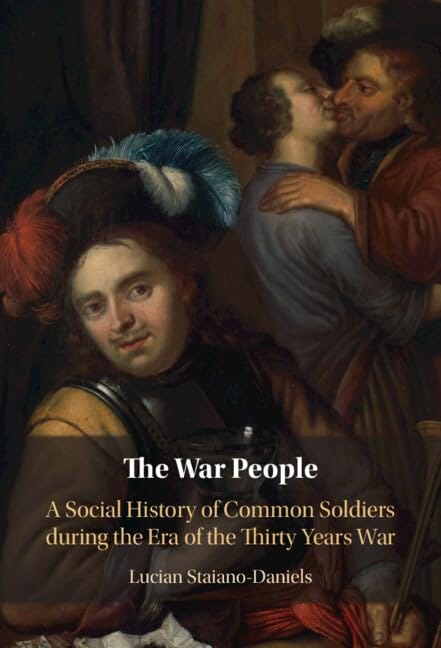
One way Staiano-Daniels situates this investigation is in terms of the relationship between military organization and state-building. Describing the existing historiography, he writes: “In this argument, early-modern states increased their control over their civilian populations in part to raise tax money for larger armies that were inhabited by soldiers who were themselves increasingly well-disciplined.” He instead finds, “neither an intensification of military discipline nor unadulterated thuggishness. The military community was made up of systems of relationships that were subtle, intricate, and disorganized.” (7). These findings are well evidenced, and significant, as earlier literature (drawing on more normative sources like manuals and regulations) asserted the intensification of discipline as part of the emergence of the modern state. Instead, we see states forced to engage in the paradoxically complexly and loosely organized world of the mercenary, unable in this time of crisis and state-emergence to fully subordinate the armed forces they employed.
The 17th century and the Thirty Years’ War serve as an important benchmark in understanding the development of war. In witnessing the lives of the kind of men with which wars of the 17th century were fought, we gain a greater understanding of the society that they moved in. In so doing, we can more easily conceptualize the forces that both constrained and enabled war in the 17th century, producing its particular form. This conception provides the opportunity to more easily understand war in other places and times and what conditions reduced or intensified its violence.
Reading this work as a Clausewitz scholar, I could also not help but see a connection between the culture of the war people and Clausewitz’s support for a national militia or Landwehr as a step towards more inclusive governance. There is, of course, a great distance between the unruly mercenaries of the Thirty Years’ War and the “nation in arms” envisioned by Clausewitz and the other Prussian reformers, but at its core we find a common phenomenon: the connection between military service and rights, personal and political.
This book demonstrates well the value of microhistory; in looking closely at the practices and prevalent attitudes of these soldiers of the 17th century, we gain a more concrete view of the prevailing social conditions. This is not just of interest for its own sake (as social history), but because social conditions greatly shape the practice of war, as Clausewitz tells us. This is so because social conditions both reflect and affect the political conditions that create war, as well as the political purpose that exercises a continuous influence upon it.
The case of the man boasting of making a pact with the devil amidst the wars of religion yet punished only mildly, since good soldiers were too valuable to waste is illustrative of the peculiar conditions prevalent. Likewise, there is the case of the man who shot a comrade while recreationally discharging his pistol in a drunken stupor: he was merely deprived of his rank for seven days and made to swear his lack of malintent (22). There was law, but no firm order. Yet an un-firm order is not anarchy. In this time of conflict and suffering the state had yet to make itself so mighty as to be able to overawe those who did violence on its behalf, elements of the older feudal relationship defined by personal allegiance between liege and vassals endured in this arrangement, in which subordinates nevertheless expected a degree of reciprocal obligation from their superiors, being always defensive of their own prerogatives. War’s form had greatly changed since even the Hundred Years’ War, but the state continued to rely upon private individuals (in this case mercenary captains) for much of its fighting strength. The standing army had not yet developed its practical monopoly.
Yet, we should not fall into the popular misperception that military organization has advanced, like a technology, as new and better forms have been invented. As Clausewitz contends it is rather that “...every age had its own kind of war, its own limiting conditions, and its own peculiar preconceptions.” (On War, 593). While innovations in the practice of war occur, Clausewitz argues that the reason Gustavus Adolphus and Frederick the Great did not fight as Napoleon did was not due to a deficit of knowledge, but because the political circumstances that followed from the social conditions of their times did not permit waging war in such a manner. “The semibarbarous Tartars, the republics of antiquity, the feudal lords and trading cities of the Middle Ages, eighteenth-century kings and the rulers and peoples of the nineteenth century—all conducted war in their own particular way, using different methods and pursuing different aims.” (586). The great expansion of violence that characterized the Napoleonic wars was enabled by an expansion of political participation, itself enabled by improvements in the material conditions of middle classes as well as the peasantry. If it had at all occurred to Frederick or Gustavus Adolphus to fight as Napoleon did, they would have at once dismissed the idea as incompatible with the political and social realities in which they were acting.
It follows from this that we should not evaluate military organization against a set template (such as modern military practice), but in how well or poorly it suits the conditions and relations of a society. It would have been as foolish for the lords of medieval Europe to attempt to assemble a professional standing army as it would be for a modern state to base its strength on feudal levies. This is not because of intrinsic traits, but because both a standing army and feudal levies depend on specific political and social relationships, and so cannot be effectively made use of when these are absent. As political and social conditions change, forms of military organization can become unsuited to them, as can new forms become more suitable, or older forms become suitable once again (a subject I have previously written on).
It is here we find yet another basis for the indispensability of the study for history for military practice: it is only by understanding historical social and political conditions that we can understand why wars were fought in the way they were, and it is only through this understanding of the past that we may understand how wars will (or may best) be fought today and in the future. The War People is an investigation of a military culture through the real phenomena that constituted it—the everyday dramas and conflicts through which the norms are seen with an uncommon immediacy—and so provides us with a firm sense of the prevailing conditions, allowing not just a stronger understanding of the period in question, but of others in contrast.
The Righteous Dudes of the Mansfeld Regiment
The mercenaries of the wars of religion are now remembered primarily for their rapaciousness. To the extent that mercenaries of the early modern period have a reputation, it is in the sheer devastation visited upon Europe by their very presence. These men saw themselves primarily as individuals: “Soldiers also engaged in little negotiations to get the best economic outcome for themselves, such as mutiny, irregular work, or theft.” (25-26). Yet, the world of these mercenaries was anything but a pure anarchy or a Hobbesian state of nature. They held their contracts and their flags in high regard, had close personal relationships, and were suing one another often enough to leave the paper trail that allows us to know them today.
At the heart of this is the idea of being a rechtschaffener Kerl, or “Righteous Guy,” as Staiano-Daniels translates it (41). A soldier lacking promised pay did not see it as dishonorable, but rechtschaffen to seek employment elsewhere, even if this meant desertion. To be “righteous” in this sense meant to be conscious of one’s rights—to stand up for them, including against superiors. This included more conventional soldierly values such as valor and consideration for comrades, but did not imply the kind of obedience that has since come to define the military profession. Instead, the righteous dude was the one who stood firm on his independence, looking after himself and his comrades against the no-less self-interested power of their employers. In this way, mutiny and even desertion were seen as just forms of recourse for violations of these rights. The military culture we see exhibited is therefore one defined by a sense of self-possession, with rights something that must be continually asserted—not a protection in themselves. Staiano-Daniels writes:
Mutinies were a form of workplace protest. The sixteenth-century Landsknechts regarded their service as a free choice and expected payment; if they were not paid punctually, they threatened to leave. Like food riots, military protests rested on a view of the world in which social relationships had to be ‘fair,’ and the recognition that this fairness required active defense… Once these soldiers resolved to mutiny, they elected their own leaders, swore to obey them, and submitted their grievances to the military authorities. The matter was settled by negotiation. In contrast to the belief that military justice in this period was harsh and arbitrary, the mutineers’ demands—arrears of pay—were usually met. (37-8)
Thus, for all the violence of the era, mutinous troops were frequently merely given what they were owed—their demands were recognized as legitimate, as was the withholding of service until these were met.
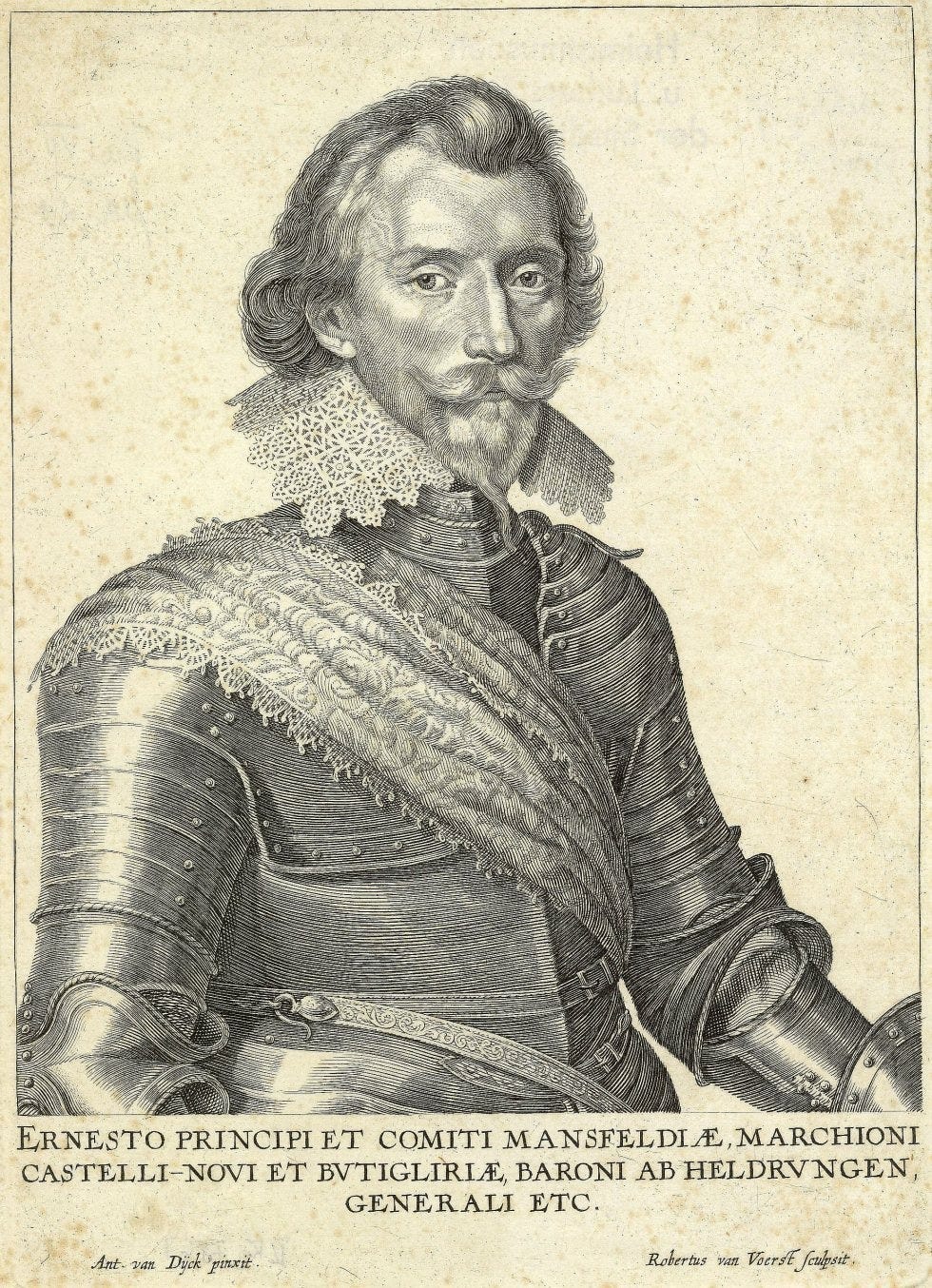
This relates to the process of the emergence of the modern state, which at this time had not obtained a monopoly on violence, and so needed to rely upon mercenaries, which were naturally less obedient than a standing army. Staiano-Dainiels notes that desertion is not given as much attention in manuals of the 17th century as those of the 18th—not because desertion was less common—but because there was little that could be done about it. As states developed stronger administrative and financial institutions, the state began to take a more recognizable shape. By the 18th century, with smaller armies and a larger administration, states could impose the harsh discipline needed to curtail desertion and compel obedience. Until then, “For seventeenth-century military authorities, desertion was something a commander simply had to deal with, like bad weather or disease.” (34).
As such, the relationship between nascent states and the soldiers they employed was one defined by negotiation, where neither side particularly trusted the other. Soldiers knew that they could not truly depend upon their employers, who often simply lacked the administrative capacity to make good on their promises, and so took matters into their own hands, regardless of the law, and with grave consequences for local communities. The clients of these mercenary companies had full knowledge of their deficits, but the exigencies of war (and their nature as free contractors) meant the “war people” could not be easily brought to heel. Instead, rulers negotiated, engaging with this military culture on its own terms, as was necessary to effectively fight the bitter wars of the period. Staiano-Dainiels cites a 1610 tract, “There has never been a regulation for dress and weapons in the Spanish infantry because that would remove the spirit and fire which is necessary in a soldier.” (65). Soldiers were exempt from sumptuary laws, which were intended to maintain the distinction between the aristocracy and the lower orders. Military service was in this sense distinguished by a greater degree of freedom and self-expression than other professions were permitted. The war people were able to leverage their indispensability to gain such privileges, in addition to the financial compensation they were owed.
The Emerging Leviathan
Taking a wider view, the mercenaries of the 17th century are certainly the extreme example of the self-possession that came with military service, but this quality was far from anomalous. Looking ahead, Rechtschaffen behavior was able to be subdued by the increased power of the state, but this also limited the appeal of service in the armed forces. Strict discipline (including corporal punishment) was understandably seen as degrading, even if it increased military effectiveness, and so military service was something to be avoided by any who could afford to do so. This arrangement also suited the Absolutist aspirations of the monarchs—aristocratic officers and well-disciplined troops centralized military control. The kind of war fought in the 17th century was unappealing in the 18th, when rulers fought not for religion, but for princely interest.
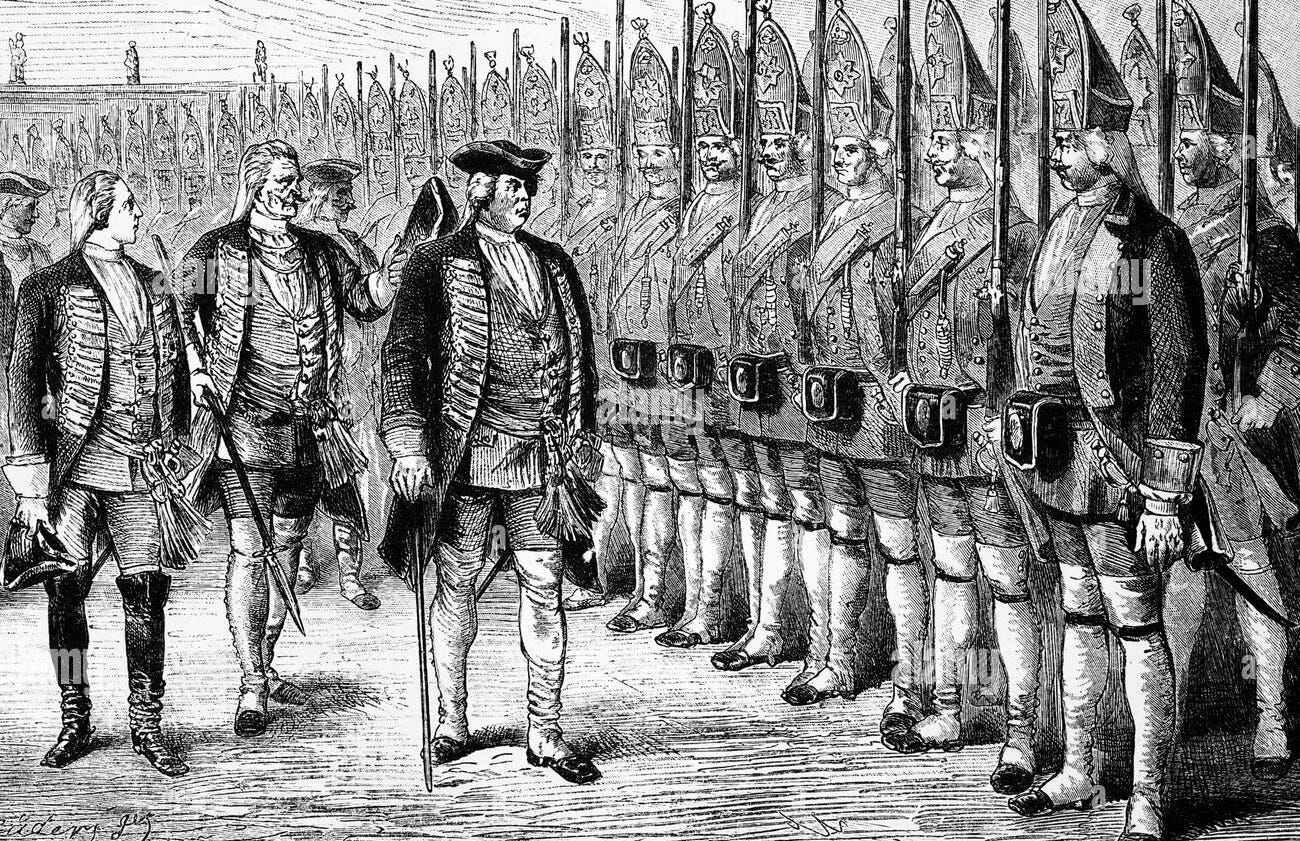
This era of more limited war contributed to a process by which the peasantry grew less destitute and the middle classes more powerful. Thus, as the century progressed, an ever greater proportion of society’s energy—its human capital, so to speak—was being left untapped by this military arrangement. The consequences of this became obvious in the wars following the French Revolution—the age of the “cabinet war” (waged by princely armies for princely interests) had ended. As Clausewitz writes, “in 1793 a force appeared that beggared all imagination. Suddenly war again became the business of the people—a people of thirty millions, all of whom considered themselves to be citizens.” From the “war people,” we come to “a people at war,” or “a nation in arms.” As the 18th century came to its end, war seemed to be regaining the violence and energy that had made it the Thirty Years’ War so destructive.
What was it about the Revolution that changed the situation? We can point to the passions invoked by nationalism as one cause, but at the core we find that it was the expansion of rights to a much greater part of the populace that brought the energy of society as a whole into play. “The people became a participant in war; instead of governments and armies as heretofore, the full weight of the nation was thrown into the balance. The resources and efforts now available for use surpassed all conventional limits;” (On War, 591,2) In the span of two centuries, war had transformed from the province of independent contractors, to professional armies serving a crown, to the business of the nation as a whole. In so doing, the aspects of military culture documented in the Mansfeld regiment evolved to take on a new significance.
Service Produces Citizenship
One might well wonder what possible relevance the band of self-interested thugs as we find in the Mansfeld regiment could have with the connection between military culture and inclusive governance. The connection we find is that—in order to bring the voluntary energy of the people into the business of war—states needed to provide a better contractual relationship than the draconian methods that were then standard. The reforms initiated in Prussia in response to Napoleon’s victory were justified in these terms. Discipline was loosened, corporal punishment was abolished—it was understood that the people being called upon to enter military life were altogether too “righteous” to tolerate the kind of treatment typical of an 18th century army.
Yet, the extension of rights did not mean a return to the indiscipline of mercenaries like the Mansfeld regiment. Instead, with the rights of the individual acknowledged in the political sphere, the state was able to demand greater contributions both in the form of military service itself and in discipline and self-sacrifice within that service. A subject forced to the colors would balk at risking life and limb for the interest of a sovereign he had no particular attachment to, and so would see it as “fair” to desert if he could (and in any case prioritize his own skin). A citizen could be induced to submit to military discipline for a time for the sake of defending his rights, which belong not only to him constitute a patrimony that must be preserved if it is to be passed to his descendants.
This example is far from the only instance of the connection between military service and political rights. From the very origins of the concept of citizenship, the two have been intertwined. It was expected in the Greek polis that every citizen was able to equip himself to fight in the phalanx. Later, citizenship became less broadly conceived, being instead a covenant between a lord and his armed retainers, who might themselves command the loyalty of subordinates in the same kind of relationship. Those seeking political rights have thus often sought to serve within the armed forces to further that interest. As a matter of tradition and necessity, the armed agents of authority may claim a special relationship with it. It was this logic that was employed by Abolitionists to encourage Black enlistment in the Union Army before the 13th Amendment formally overturned the Dred-Scott decision. Bearing arms provides intrinsic power (and so makes one’s political support more valuable) but also has a moral (or psychological) dimension.
The risk of injury and death inherent in the profession of arms requires an ethos of courage, being seen to uphold this ethos through honorable service creates a sense of reciprocal obligation. Roman senators would ostentatiously display the scars of wounds they’d received in service to the res publica as a rhetorical device. It is on the same basis that the rechtschaffener Kerls protested their own mistreatment, whether in lack of pay, supply, or respect. Just as mercenaries relied upon their contracts that established their due rights and obligations, vassals might make the same claims upon their lords, and citizens upon their governments, each citing the valuable and honorable work of military service as the essential basis on their claims. Even as each of these circumstances and cultures greatly vary, all have in common the expectation of “fair” compensation for military service in particular.
In the seemingly absurd and often violent anecdotes of the Mansfeld regiment, we see the particular manifestation of a continuous force in history: the demands of the fighting man for recognition and compensation. This could be in the form of cash, but also in prestige, privileges, and even rights. Roman Legionaries being granted land to retire on, Spanish mercenaries being exempted from sumptuary laws, and the Napoleonic Legion of Merit are all forms of this compensation. First rulers, and then states had to engage with the prevailing military culture (and socio-economic realities) of their times in order to withstand their opponents. This was a delicate balancing act between strengthening the armed forces and maintaining social order. This invariable need to appease the armed forces thus made military service a tool for those seeking social change. Far from instilling docility, military service by long tradition and intrinsic power fostered a demand for reciprocity, for “fairness.” As circumstances changed, this transformed from a demand for regular pay and plunder to a demand for political rights.
The Egalitarianism of Violence
Beyond this idea of reciprocity, the example of the Mansfeld regiment demonstrates the degree to which the realities of military life could produce a measure of social equality unparalleled in the civilian world. In one instance, a noble officer and a common soldier got in an argument while drinking, resulting in a duel and the latter’s demise (84). The harsh conditions of soldiering limited the extent to which higher classes could distinguish themselves. Likewise, the profession dealt in violence, and so had a hierarchy that did not accord strictly with birth—pikemen were more prestigious than musketeers, dragoons less prestigious than regular cavalry. Seniority was also a factor, with old soldiers being necessarily valued as a practical matter. “Nobles filled the ranks of the common cavalrymen because the cavalry was prestigious, but one of these noble troopers could have found himself being led by his social inferior in battle.” (89). From this we can more clearly see the manner in which military service could threaten a stratified social order.
It is in this context that we must view the doomed proposal of the Prussian reformers for a Landwehr based on the principles of universal service and local organization. It will then not seem so strange that these men, who had once hoped to give Prussia a constitution, instead came to believe that popular participation in the armed forces was a route to granting the people a stake in the fate of the state. At first glance, there is little to unite the self-interested and unruly soldiers of the Mansfeld regiment with the Landwehr, a national militia appealing to communal sentiments, expecting fealty to the state and the nation it represented. Yet, there is a connection in the political effects that a national militia produces. Just as the mercenaries of the Mansfeld regiment were conscious of their rights under contract, an individual taking up arms for a state feels a just claim to it. Military service came with the expectation of a recognition of rights, just as in an earlier age feudal vassals had received privileges, and just as the Mansfeld regiment had expectations it could require to be met.
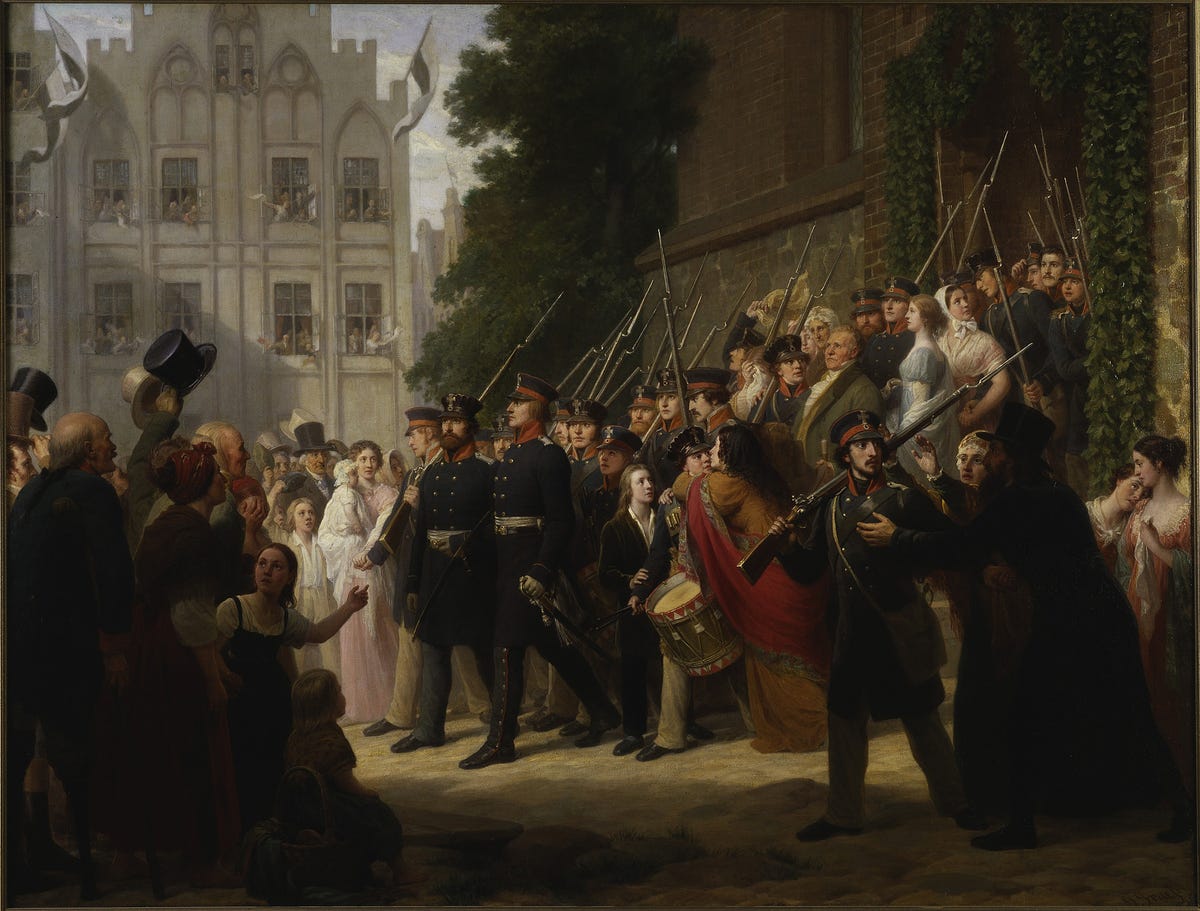
Conservatives within the Prussian elite were conscious of this, and opposed the institution of a Landwehr precisely because of its impacts on the masses. Indeed, an immediate objection to the proposal came from aristocratic quarters on the grounds that it would produce situations in which a noble may come under the command of a commoner. The failure of the proposal was—essentially—from an aristocratic fear that arming the people under middle-class officers would make them far too rechtschaffen and so form a revolutionary nucleus. In advocating for the Landwehr, Clausewitz casually dismissed the danger of revolution by suggesting a parliament if there was a need to corral the energies of an armed populace. Soldiers had not gotten less rechtschaffen, but their compensation and consciousness had changed—no longer were they private contractors with only a professional stake in their treatment: they were part of a community embodied by the state and so had common interests with the state. They were willing to forgo the license demanded by mercenaries and submit to military discipline (albeit with its most degrading aspects largely removed) in exchange for political power and recognition, and the risen power of the peasantry and middle-classes made variants of this bargain indispensable for the states of Europe.
Recalling the Century of Crisis
When looking only at the 18th century onwards, one can roughly see a teleology, of war broadening in its intensity and violence, from the small armies and limited aims of the “cabinet wars,” to the more violent and all-consuming Napoleonic Wars, to the yet larger and more deadly American Civil War and Franco-Prussian War, and ultimately to the World Wars. Looking back to the Thirty Years’ War complicates this picture, exhibiting a degree of unconstrained violence inconsistent with the idea of war’s broadening with time. As Clausewitz wrote in reflection on the Napoleonic Wars, “It is no more likely that war will always be so monumental in character than that the ample scope it has come to enjoy will again be severely restricted.” (593). We therefore see that war has no intrinsic development towards a more extreme or violent form and that limited wars cannot be omitted from analysis, as it is the specific conditions that determine war’s shape at any given time.
Much takes a different shape if we include the “century of crisis” in our wider view of the history of war. The draconian discipline and dehumanizing character of military service in the 18th century has loomed large in the popular conception of the profession. For example, the idea of Kadavergehorsam, “corpse-like obedience,” used the unthinking obedience demanded of the common soldier in the old Prussian army as an analogy to criticize obedience to the Nazi regime. Yet, in looking at the military culture of the 17th century, it is difficult to view the model of military service and culture that prevailed in the 19th and 20th centuries as a mere outgrowth of the 18th century, entirely disconnected from the military culture of the preceding century. The forces that made soldiers rechtschaffen had not disappeared, but were able to be effectively suppressed. This was first through coercion, and subsequently through a contract that conceded this self-possession for political rights.
In this way, with the development of the nation-state, military service became neither the work of independent contractors and clients, nor the business purely of the monarch and his or her army. Wars became a matter of public concern, which made citizens willing to subject themselves (and one another) to military discipline, while nevertheless maintaining the sense of pride and self-possession that had been both disruptive and indispensable in the 17th century. The energy that made the mercenaries of the Mansfeld regiment a terror to the communities they encountered had been usefully suppressed in the 18th century, but could now be channeled to more productive military purposes, as the concept of citizenship within a nation aligned personal and state interest to an unprecedented degree.
Yet, “rights for service” was not an easily struck bargain. The crisis of the Napoleonic wars spurred concessions to the lower classes in Europe’s monarchies, and the outrages of French occupation drove many to military service in hope of liberation, but with the crisis ended, the monarchies of Europe were keen to reassert their power, reneging on whatever concessions they could afford to, as was seen in the failure of the Landwehr proposal. This naturally provoked a wave of resentment from those righteous fellows (many newly minted) who felt owed recognition and participation in the community they had been called upon to defend, and often still remained obliged to serve. As in the 17th century, a contract had been made, and its violation was an unfairness that justified a response. This—for the most part—only came in the ill-fated Revolutions of 1848. Even with that discontent frustrated, the states of Europe could not escape the need to offer membership within a nation with some degree of attendant privileges. The cooperation of the middle-classes (and at least the acquiesce of the lower orders) was necessary to administer a modern state and achieve mass-mobilization. Recalling the “righteous guys” of the Thirty Years’ War allows us to understand how demands for rights are connected with military service and culture.
The author graciously provided a complimentary copy of the text.
This is really good!
This is a valuable distinction. Rights can protect the person from violation, but righteousness asks a harder question: what kind of person is being protected, and toward what kind of life? Modern moral language often becomes thin when it speaks only in claims. A right can tell me what may not be taken from me; it cannot, by itself, teach me what I owe, what I must become, or how my freedom should be ordered toward the good.
Perhaps that is why the older language of righteousness still matters. It refuses to let justice remain merely external. It brings the question back into the soul.