


This is the second part of my commentary on John Boyd’s presentation and criticism of the ideas of Carl von Clausewitz, continuing directly from where the first part left off (linked below).

Increasing or Decreasing Friction
“All this simplification and compression emphasized ‘method and routine at the tactical level’ to mitigate internal friction. Boyd took issue with this intense focus on reducing friendly friction to the lowest absolute level. As he saw it, this inward look ‘failed to address if you want to try to magnify [your] adversary’s friction and uncertainty.’”
In addressing this, I will merely refer to this piece by Olivia Garard (also containing a very interesting digression on Clausewitz and The Iliad), which deals specifically Boyd’s comments on Clausewitz’s view of friction. As she writes, “I imagine Clausewitz rebutting Boyd: If one cannot be certain enough about oneself, or one’s own disposition, then how could one be sure enough of the adversary to affect them in such a way?” This gets at the core of Clausewitz’s difference with Boyd. Clausewitz in no sense opposes trying to magnify the friction of the other side, but he does not dwell on it because it is a fundamentally situational question that is often practically beyond our reach. Instead, he argues, as a principle, one must be concerned with the center of gravity, both defending our own or striking at the enemy’s.
In short, the danger Clausewitz perceives with emphasizing imposing friction as an end in itself is that it causes one to lose sight of what is vital: typically, defeating large numbers of enemy troops. As he explains in the chapter on stratagems, deception operations and cunning plans to impose friction on the enemy can work, but they are rarely economical, since they often fail and will weaken our forces through dispersal, which increases the effects of friction. The thing Clausewitz insists we always hold in mind is that the enemy can always demand a “cash payment” in the form of forcing a major battle on us. In such a situation, it can easily be fatal to have our combat power frittered away on friction maximizing missions, as the dispersal required also increases our own friction, which makes it difficult to match the enemy’s concentration and prevent them from simply overwhelming us by weight of numbers (a victory that their concentration is likely to enable them to exploit.)
Thus, in emphasizing the friction that can be imposed on the enemy, Boyd neglects the dangers of the friction that dispersal produces, losing sight of the rationale behind Clausewitz’s principles: that conducting war is extremely difficult and that merely achieving mediocre results often takes all our effort. Using stratagems to weaken the enemy is an exception to the rule, which war integrates into its theory by demanding exceptional circumstances. Our own weakness may require us to look to high-risk, high-reward options, or a particular defect of the enemy may make them particularly vulnerable to such a means, but there must be sufficiently strong justification.
The Schwerpunkt
“As Clausewitz saw it, the center of gravity ‘is always found where the mass is concentrated most densely.’” Clausewitz does indeed say this in Chapter 27 of Book VI. Yet, in Book VIII, Clausewitz is explicit that the center of gravity is often the enemy’s capital, as it was for Napoleon in the Waterloo campaign. Furthermore, “in small states dependent on greater ones, it lies generally in the army of these allies; in a confederacy, it lies in the unity of interests; in a national insurrection, in the person of the chief leader and in public opinion..”1
The reason for this apparent contradiction is that Clausewitz—in both cases—is deploying an analogy from physics to aid in describing two different but related things. The word he uses, Schwerpunkt, has since become fashionable jargon, but makes relatively few appearances in On War. Literally translated, it means “heavy” or “dense” point, which makes its use as an analogy clearer in some places than the translation of “center of gravity” might imply. In Book VI, he is talking about the center of gravity of an enemy force, as the rest of the paragraph makes clear: “There are, therefore, in these armed forces certain centers of gravity, the movement and direction of which decide that of the other points, and these centers of gravity are situated where the greatest bodies of troops are assembled.”2 The center of gravity is not a weakness, but thing that will move other things along with it. “We must constantly ask ourselves what effect the advance or retreat of one part of the forces on either side will produce on the other parts.” This concept is more broadly applied when discussing the plan of a war overall in Book VIII, but here clearly refers only to “the center of gravity of an enemy’s military power.”
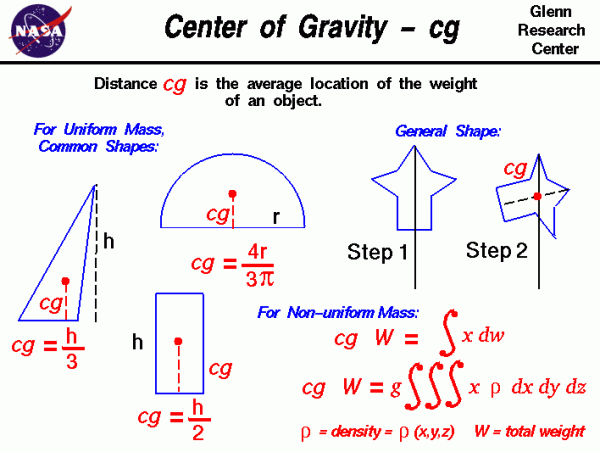
We may therefore say that Boyd makes some facile criticisms of the concept: “‘In a donut, the center of gravity [is where] there is no mass. In a hollow steel ball, it’s where the steel isn’t. In a dumbbell, it’s in the connection between the mass.’” It is true that in physics the densest parts of an object are not always the same as its center of gravity, but an total fidelity is not necessary for an analogy, which is illustrative, not a form of proof. If this can be considered legitimate theoretical critique, then writers ought never to seek to illustrate by analogy or metaphor—unless they can be assured of its absolute congruence.
The most Clausewitz can be said to be guilty of is using an analogy imprecisely. What Clausewitz is arguing (in Book VI) is that the center of gravity in an army is found where its masses of troops are gathered. As he says in the preceding paragraph, “The circle of influence of a victory is determined by its magnitude, and this is determined by the masses of the defeated troops.” The analogy of the center of gravity is applied to illustrate the way in which a force directed at this center produces the greatest effects on the object. That we might imagine this part of war to function like a part of physics to better visualize it does not mean we should seek to apply the laws of physics to war to understand it. One cannot dismiss the effects of a blow to a mass of troops by appealing to the effect of a blow to the center of gravity of a donut.
As far as his meaning in Book VIII is concerned, it is in a section addressing a plan of war where the total defeat of the enemy is the aim. Here he writes: “it is… by seeking out constantly the nucleus (Kern) of hostile power, and staking the whole thing in order to gain the whole, that we can actually strike the enemy to the ground.” He also describes the center of gravity as “a center of power and movement… upon which everything depends;”. This is a much firmer use of the analogy, in that it is not dependent upon the density of mass, but the point upon which forces hinge.
In neither case does Clausewitz rely on the actual mechanics of physics to define his meaning, but only as analogy. The validity of an analogy has no bearing on the validity of an assertion. It’s necessary to look clearly at this because one of Boyd’s central critiques of Clausewitz is based upon conflating not only these two uses of the analogy, but conflating the analogy with the strict mechanics of reality. This mistake leads into a common but fundamental error: the stereotyping of Clausewitz on the subject of mass.
The Return of the Mahdi of Mass
“If you accept that… that [the center of gravity is] where mass concentrates most densely, then you go after that, then you’ve got strength against strength.” -John Boyd
“[Clausewitz’s] gospel deprived strategy of its laurels, reduced the art of war to the mechanics of mass slaughter, and incited generals to seek battle at the first opportunity, instead of creating an advantageous opportunity.” -B.H. Liddell Hart
The Clausewitz that Boyd is criticizing seems to be no more than the phantom conjured by B.H. Liddell Hart, who named him the “Mahdi of Mass” responsible for the carnage of the First World War, bearing little resemblance to Clausewitz’s actual writings.3 Though Boyd was contemptuous of Hart, his characterization of Clausewitz is nevertheless an echo of his. In truth, Clausewitz is agnostic on how you deal with the enemy’s mass; if you have a clever tactic that lets you soundly defeat them with few losses, so much the better. The center of gravity is the target—that does not imply inartful means.
For Clausewitz, the reason (in Book VI) that you strike the center of gravity is that its being “moved” brings the lesser parts along with it. Boyd in fact works himself back to somewhere near Clausewitz’s actual position, “Boyd wanted to ‘find that thing that allows [the organic whole] to retain [its] connectivity;’ and once identified, ‘break down those connections and get everything flying off in different directions, [and] now you’ve got many what I call non-cooperatives. Each one’s a little center of gravity not connected up with the other one…then you scarf them up.’”
Yet, Clausewitz maintains that usually the only thing that can break the cohesion of a force is a large number of its troops being defeated. There is no hidden thing that can cause a whole army to unravel without fighting if only one is clever enough to see it. If peculiar circumstances permit such an occurrence, the theory of war must leave the matter of correctly perceiving these opportunities to the judgment of the commander.
Thus, Clausewitz asserts the primacy of defeating the enemy in battle and overcoming the greatest part of their forces possible. This does not imply this is the only viable means in war, merely that other means should be thought of in relation to this one—that is to say, by whether they aid in ultimately attaining a victory over a significant mass of the enemy, whether they “move” his center of gravity. What Clausewitz aimed to counter was the notion that one could avoid the risks and costs of battle by striking at lesser objectives, such as capturing territory or maneuvering without seeking battle—ideas that were prominent in the pre-Napoleonic literature on the art of war.
The problem with Boyd’s supposed contrast with Clausewitz’s “strength against strength” is that the enemy gets a vote. Clausewitz, from the outset, establishes that situations must be judged individually, and so writes under the presumption that the two sides in question are acting competently, to examine tendencies within war itself, rather than characteristics of a specific case. This point is important because a competent opponent will not allow you to do what Boyd advises (to “break down those connections”) while he has significant forces at his disposal. As Clausewitz writes, “The bitter earnestness of necessity usually forces us into direct action, so that there is no room for that game [of stratagem]. In a word, the pieces on the strategical chessboard are lacking in that agility which is the element of stratagem and cunning.”4 This is to say, in war, you should expect to be hard-pressed by your enemy; frustrating his plans to defeat you will (as a rule) require so much effort that your ability to execute complex schemes will be limited (in addition to the intrinsic friction that all actions in war are subject to.)
Brown gets at this idea when he acknowledges, “Though Clausewitz noted that the center of gravity could be something besides an enemy’s army—such as a national capital, a rebellion’s leadership, or the community of interest in an alliance—his examples were generally physical objects valuable enough to an enemy that they would be well-protected.” Thus, there may be rare occasions on which the enemy makes a massive blunder and exposes their center of gravity (in either sense), but where this is not the case, it becomes necessary to fight to attain it, and it must remain the highest objective even in these cases.
Clausewitz asserts that this must be accepted even if the cost is high, because this is the only means to overthrow (i.e., utterly defeat) the enemy, which is the presumed objective in this section of Book VIII. His intent in this section (again explicitly stated) is to caution an attacking commander against instead going after lesser objectives, such as the occupation of a lightly defended province, that do not actually threaten the enemy’s center of gravity. The reason for this has to do with the notion we addressed earlier: that time benefits the defender more than the attacker. As such, even if it’s a hard fight to destroy the enemy center of gravity (destroy their army, take their capital, depending on the case), it will be easier to do so sooner rather than later, when time has sapped the power of the attacker. This is not always the case, but these are exceptions, and therefore require justification.
Clausewitz does not say that one should reject the idea of using maneuver, deception, and all kinds of stratagems to weaken the enemy and so more easily overcome him. What he continually reinforces, however, is that real war limits the scope of these efforts, and so he cautions against undue faith in them. The great danger—that he knew from experience—came in trying to use clever stratagems against an enemy willing to relentlessly seek battle. He likewise knew the tendency of officers whose only experience with command came from books to imagine being able to devastate their enemies with brilliant plans and cunning stratagems. The emphasis on defeating large numbers of enemy troops is therefore not merely a theoretical distinction, but a practical one. There is little that can compensate for having a great mass of one’s forces defeated and there is much that defeating a great mass of the enemy can compensate for. Holding this thought in mind is therefore considered a helpful point of reference for the student of war.
Conclusion: A Coup d’œil of Boyd
That Boyd did not understand Clausewitz is understandable—but the manner in which he engages with On War demonstrates a failure to grapple with its core arguments, even those which were laid out explicitly, in its most frequently read parts, or directly adjacent to the parts he refers to. Boyd, for example, disagrees with Clausewitz on the superiority of the defense, citing the example of Nazi General Hermann Balck, who achieved success by attacking numerically superior Soviet formations. In this, Boyd fails to acknowledge that Clausewitz’s understanding of the defensive explicitly includes opportunistic attack, asserting instead that he had an “absolute notion.”
Likewise, Boyd demonstrates no awareness of Clausewitz’s assertions as to the proper role of theory, what can be accomplished by it, and what the roles of “absolutes” and “principles” are within it. Clausewitz writes at length on what theory ought to do, how its principles ought to be employed, and what must be left to the judgment. Even from merely reading the immediate context of the sections referenced, Boyd’s characterizations are implausible, simply incompatible with a close reading of the text.
I understand that an essay of this nature from a “Clausewitzian” may appear defensive. But in truth, the most damning thing I can say about Boyd is that I have seen nothing that represents Clausewitz well enough to really constitute an attack on him or his theories. Clausewitz’s reasoning is not challenged, and so requires no defense. Rather, this article has been an effort to differentiate Clausewitz from the vaguely Clausewitz-shaped object that Boyd evidently enjoyed tilting at.
In looking at Boyd more generally, my overall judgment must rely upon a certain coup d’oeil, as I am historian of Clausewitz, not Boyd. With that being said: in surveying the claims and arguments present in the slides and transcript in Snowmobiles and Grand Ideas, I could not escape the impression that Boyd seems only able to imagine himself in the position of a Napoleon (or a Balck)—with superior means, morale, and cunning—(perhaps with inferior numbers) but never in the opposite position, as someone facing Napoleon, with a demoralized force, inferior organization, outmatched as a commander.
Boyd repeatedly talks about what one ought to do to the enemy, presenting a vision of an enemy paralyzed by clever maneuvers and stratagems. This is all very good on paper, but in real war, as Clausewitz says, even our greatest efforts often scarcely manage to produce more than average results. Characteristic to his view of war as an interaction between “living wills,” is the comment that “We assume that the defender acts just as faultlessly and judiciously as the assailant.”5 The same cannot be said for Boyd, with his conviction that one can reliably produce “non-cooperatives” that can be “scarfed up” to avoid the collision of mass against mass.
One must wonder if this can be attributed to their respective service histories. John Boyd’s career was as a fighter pilot in Korea, in which he never had the chance to fire a shot in anger. He then spent his as an instructor in air combat, before being brought into the Pentagon, where he would remain as a consultant even after his retirement (this tenure was interrupted by a short time in Vietnam, in non-combat roles). Boyd was, generally speaking, a peacetime strategist. This is not to disparage Boyd’s service—as Clausewitz often lamented, the scope of an officer’s career is often determined by factors far beyond human control. Yet, the conceptual error of underestimating the capacity of the opponent is one more easily made when has not faced the bitter realities of combat against a peer or even superior enemy.
Clausewitz, by contrast, experienced years of intense and bitter conflict, first in the crushing defeat in 1806, then in the grueling retreat into the Russian interior, and finally fighting to Napoleon’s defeat in the Hundred Days. He therefore spent his years of active service grappling with the problem of facing a superior enemy, and sought to study war in a way that was useful both for someone with the talent of Napoleon, and for someone who had the unenviable task of facing him. Clausewitz’s experiences with real war served as a reminder of how much of one’s exertions were required to merely avert disaster, and of how infrequently opportunities for great victories were granted.
The defeat of 1806 and the role it played in Clausewitz’s thought is something that separates him from Boyd. The challenge Boyd sought to address was how the US had failed in Vietnam, despite vastly superior means. Clausewitz grappled with the question of what Prussia ought to have done in 1806, when facing Napoleon with an outdated and inferior army. His theory is thus concerned as much with avoiding disaster, as seeking great success. In both cases, he finds boldness, moral courage, to be at the core. Whether one has the superiority needed for a stunning victory, or are merely attempting to ward off a crushing defeat, in both cases one must seize upon the best chance at success, and not be dissuaded by the immediate ease of other courses that are less promising.
In Boyd’s service history, influence, and theory of war, I cannot help but see a parallel with Alfred von Schlieffen. Both men saw limited combat; both inspired a number of devotees, long after they had left the scene (both also had a reputation for asceticism); both had something they saw as the key to victory in war. For Schlieffen, this was the turning movement and envelopment, for Boyd, this was the magnification of an enemy’s internal fiction, the disruption of their ability to resist, primarily through speed and deception.
The Essential Difference
Where Clausewitz greatly differs from both men is that he argues that there is no one approach that is universally superior or more likely to lead to great success in war. This is a view derived from his belief that people fought differently in the past not because they did not know better, but because the prevailing social and political realities constrained their ability to fight any other way. That is to say, Frederick the Great could not have fought as Napoleon did, nor could Napoleon have fought as he did if he lived in the times of Frederick the Great. This variation of war not just in its form, but in all its essential phenomena is what makes producing a useful theory for it so difficult.
For Clausewitz, theory establishes the baseline for sensible or natural conduct, which must always be modified by the particular circumstances of the case. If one wishes to learn about war from books, Clausewitz prescribes “critical analysis,” the judgment of a commander’s decision in a historical case, comparing it to alternatives.6 In this respect, the principles of theory serve as a starting point, providing the student a point of reference from which to begin exercising their judgment, and which can be referred back to without needing to recapitulate them each time they occur. In practice, Clausewitz leaves it to the genius of the commander to judge the unique situation they encounter, and find the route to a great victory if one is available, acknowledging that book learning cannot prescribe any one method that is universally applicable.
Sometimes you do, in fact, have the opportunity to do as Boyd advises and inflict such disorientation on the enemy through maneuver or stratagem that they’re incapable of major resistance. But this requires specific circumstances that are not universally present and cannot be created by the skill of a commander where they are not. Taking Boyd’s view as the principle would in most cases lead to disaster, as complex schemes to disrupt the enemy by dispersion fall afoul of friction, and tend to be overwhelmed by the simple superiority of strength by concentration. That is to say, if you try to disperse your forces and probe for Napoleon’s weaknesses, he’s going to bring concentrated force to chew up your dispersed forces. If you meet concentration with concentration, you may or may not find opportunities for a great victory, but you can limit your opponent’s opportunities. For a more recent example, one could perform a critical analysis of the Battle of Kursk from the Soviet perspective.
What is key to understanding Clausewitz correctly, as opposed to falling into the trap of Liddell Hart and Boyd, is that concentration is not incompatible with intelligent use of force. If I have a sound tactical plan for my five divisions to attack your one, you’re going to get rolled unless you bring about a concentration to match mine. You might have a very clever plan for this one division to hold out, but there’s no way to guarantee this is really a better plan than mine—this has to be judged on the basis of the particular situation, whether I’m an opponent against whom you can afford to risk not answering concentration with concentration.
What Boyd appears not to understand is that when you get two sides trying to hold each other “by the throat” and “go through the back door,” you’re going to end up with a brutal collision of mass against mass, even if you gain the advantage. The Eastern Front is the prime example of this, with both sides suffering grievous casualties even in their most successful operations (Barbarossa, Bagration, etc.). As Clausewitz might say, what is more natural than that the tactics suitable for Desert Storm (or Frederick facing Daun) would spell disaster against a peer foe (facing Napoleon)?
Thank you for reading this article. I am aware in writing this that many hold strongly differing views on Boyd and his ideas and encourage comments in that vein. However, I would very much appreciate that wherever possible, direct reference to statements made by Boyd is made, as thanks to Ian T. Brown and Frans P. B. Osinga, much of his material is available online in Snowmobiles and Grand Ideals, and questions of interpretation are much more productively discussed with a common reference to the verbiage and context at hand.
On War, Book VIII, Ch. 4, pg. 921 (as before, all page numbers refer to the Jolles translation published in The Book of War).
Book VI, Ch. 27, pg. 785.
As Christopher Bassford writes in Clausewitz in English, “Liddell Hart argued that Clausewitz, whom he nicknamed the “Mahdi of Mass,” had reduced strategy to the simplistic act of bludgeoning the enemy to death with overwhelming numbers.” via www.clausewitzstudies.org
Book IV, Ch. 10, pg. 425.
Book VII, Ch. 15, pg. 860.
See Jon Sumida, Decoding Clausewitz, which I highly recommend for explaining precisely how Clausewitz saw theory as a practical matter, which lives up to its title in aiding interpreting On War.
How would Clausewitz have analysed the war between USA/Israel and Iran?
I'd recommend revisiting the history of General William E DePuy and how Active Defense came into being. Him and Starry. They are the "official" history of doctrinal shift. (DePuy was briefly discussed in "Blind Strategist")