


“Now if one or the other finds that he has deceived himself in his calculation… In such a case he manages as best he can, and hopes for favorable events in the future, although he has not the slightest foundation for such hope, and the war in the meantime drags itself feebly along, like a body worn out with sickness… If this influence of the political object on war is once permitted, as it must be, there is no longer any limit, and we must put up with descending to such warfare as consists in a mere threatening of the enemy and in negotiating. ”
-Carl von Clausewitz, On War
Hostile Interests
To begin, it’s worth laying out the main forces that led to this war. Of these, there are three major forces affecting the two main initiators (Israel and the United States):
The first, which affects both Israelis and American interests, is Iran’s persistent hostility. This has fostered a nucleus of hawks in multiple countries that would like to strike Iran to harm it and reduce its capabilities. They have been hitherto incapable of convincing policymakers of the worth of this course of action.
On the US side of the equation, success in Venezuela has given Trump victory disease (the phenomenon where success leads to ill-considered action out of a sense of invincibility). The aforementioned hawks have been able to leverage this sense of invincibility to couch their own arguments for action. This is to say: the hawks knew the real costs, but concealed them by appealing to Venezuela as a model, intensifying the effects of victory disease.
For the Israelis, the prime mover is the October 7th attacks. Strange as it may seem in hindsight, before the attacks, the confrontation between Israel and Iran (including its proxies) was at a stable level of low intensity. Neither side saw escalation as in their interest, even as both saw a need to confront the other. October 7th, with limited Iranian involvement and far greater success than even Hamas anticipated, disrupted this equilibrium. Israel has since seen it as necessary for its security to weaken or destroy Iran’s network of proxies, including Iran’s ability to support and protect them. Israel’s success in attacking the leadership of Hezbollah and in the Twelve-Day War emboldened it, and demonstrated the weakness of Iranian threats of escalation.
By keeping these forces in mind, we can better understand the various statements and actions of the parties involved. Looking at the current situation, we can assess that of these interests, Israeli interests are being fulfilled, as are those of the US hawks. Some parts of the US administration represent the “hawk” perspective and see the weakening of Iran as a worthy goal in itself. For them, Iran has been irrevocably committed to destabilizing the Middle-East and so action against them was needed sooner or later, and the present constituted an unusually good opportunity. The interests of the President however—and anyone else in his circle who truly believed the Venezuela model was applicable—are not being fulfilled. Trump, expecting a Venezuela situation, has buyer’s remorse, but no easy exit.
For him, perhaps, the war is already a defeat. However, the line between those pursuing the Venezuela model and the hawks is far from clear—many who hoped for an outcome on the Venezuela model (or for outright regime change), may have been content to simply weaken Iran in the traditional hawkish view if that failed. In this conception, the attacker would merely be revising his policy goals in light of a clearer understanding of the situation. He has been defeated in one respect, but now pursues a lesser objective. Throughout this discussion, it must be remembered that victory means only achieving an objective—it does not mean doing so economically. In other words, not every victory is worth its price.
You may wonder why we have not categorized Israel as having victory disease, considering this war was driven in part by preceding success in the Twelve-Day War and against Hezbollah. This is because Israel is pressing a genuine advantage against an opponent that is its primary security concern. In contrast to the United States, there are no bigger fish for Israel to be frying. Bearing the costs of war is justified in their calculus if it can prevent another 10/7. Furthermore, the costs of Iran closing the strait are both relatively and absolutely less significant to Israel than to other states. In other words: this war (or escalation within an existing war) has costs much more proportional to the benefits Israel can expect than is true for the US.
It must also be remembered that this war is a failure of Iranian deterrence; their aim was to shelter their proxies under the threat of missile attacks and the closing of the strait. These proxies have been greatly degraded, and the threat upon which Iranian deterrence rested proved insufficient to prevent the assassination of all its senior leadership. It is true that this war was initiated in part because of American misjudgment, but this misjudgment was enabled by an accurate perception of Iranian weakness.
If this were simply a conflict between Iran and the US, finding terms for a ceasefire would not be as difficult. Iran only needs to inflict enough pain in the strait to feel that the US understands that it miscalculated in its attack. Since the US actually did miscalculate, this would not be all that difficult to achieve; future US admins are unlikely to repeat the attempt. Of course, this requires that Iran accurately perceive the driving force behind US involvement. If Iran believes that the US struck merely because the hawks got their way (as opposed to the hawks being able to exploit the victory disease produced by success in Venezuela), then Iran may erroneously believe deterring future strikes requires drawing out the conflict. In this way, the intrinsic uncertainty of war may lead to its prolonging. But in any case, this war is not merely between the US and Iran, a complication which we will now address.
The Center of Gravity in a Coalition
We don’t want to get into a pedantic discussion about the meaning of center of gravity, so we will instead rely on how Clausewitz describes it in Book VIII Ch. 4: “...a center of power and movement… upon which everything depends.” He further describes it as the core (Kern) of hostile power. If this seems vague, it is deliberately so. Clausewitz cites a host of historical examples, before declaring: “the result cannot be determined from general causes… All that theory can say here is that the main point is to keep the predominant conditions of both parties in view.” In other words: it depends. He goes on to give examples of centers of gravity, which include a state’s army, its capital, the leaders of a rebellion, or—in weak states with a stronger ally—in that ally’s army. In all cases, however, it is the thing that carries everything else along with it if it is moved i.e., what is indispensable.
It must be caveated that this section addresses specifically the matter of overthrowing (utterly defeating) the enemy. In that kind of war, the center of gravity has particular importance, in that it must be overcome, and so it is perilous to expend resources pursuing tangential aims. In limited war, as we have discussed, the aim is instead only to alter the enemy’s calculus of probabilities, so that they deem concession preferable to continuing the fight. Nevertheless, the center of gravity still has relevance in such a war, for its importance means that threats or blows against it will have a greater impact than those directed elsewhere.
The center of gravity is therefore often only clear in hindsight, but must be sought in the moment with imperfect information. When facing one other state, this determination can be made in a relatively straightforward manner. However, if multiple states declare war on another, the matter may become more complex.
If two or more states combine against a third, this constitutes, politically speaking, only one war. However, this political union also has degrees. The question is whether each state in the coalition possesses an independent interest in the war, and an independent force with which to prosecute it, or whether there is one among them whose interests and forces the others lean on for support.1
In this latter case, Clausewitz claims the center of gravity can be worked out in relation to this main state. In the current war with Iran, the immediate conclusion would be to designate the US as this main state. However, it’s also possible to regard Israel as the main state of a coalition if we expect that its cessation of participation would lead the other members of the coalition to do the same, whereas the same could not be said of any other member. This may seem odd, considering the disparity in size and strength between the United States and Israel, but the center of gravity is not merely a question of might, but also of political commitment (which we have elsewhere discussed).
In Clausewitz’s terms, a belligerent’s capacity for resistance is a product of the factors of the quantity of means available and the strength of the will. A state with more limited resources but greater strength of will may have an overall greater capacity for resistance than one with greater means but lesser will. If Israel is willing to continue to prosecute this war alone but the same is not true of the United States, the center of gravity of the coalition must rest with the former. Yet, the reverse may also be true—Israel may only be willing to prosecute this war for the duration of American involvement, content to be carried along, satisfied with the marginal gains it attained through an ally’s endeavor. In either case, there would be only one center of gravity to the coalition, which Iran ought (in principle) to direct its efforts against.
But what about the former case? What if there are multiple states in the coalition that possess independent interest and means to prosecute the war? Clausewitz goes on to say “There are very few cases in which this kind of conception is not permissible, and where this reduction of several centers of gravity to one cannot be made. But if this cannot be done, then indeed there is no alternative but to look upon the war as two or more separate wars, each of which has its own aim.”
Israel certainly possesses independent means and may have its independent interests (on this subject, Yair Rosenberg’s assessment of the changed calculus post Oct. 7th is convincing). From this, it would follow that we ought to talk about two separate wars. If both parties have independent interests and means, an American loss of interest in the war would not necessarily carry Israel along, nor the reverse. If it does, it will have been justified to consider it one war. But if either is willing to carry on its campaign regardless of the decisions of the other, then it would be correct to regard the whole as two wars. If this is so, then Iran must reckon two centers of gravity. If the US is the sole center of gravity in the coalition, if it is moved, it will pull the others along with it. If Israel is its own center of gravity (or indeed the coalition’s center), it must be moved separately.
Therein lies the problem for Iran: closing the Strait of Hormuz is an effective means of affecting the US, but not so much Israel. It would not be unreasonable for Iran to hope that the US is in fact the center of gravity of the coalition. In any case, the relative ease with which Iran can produce political effects against the US justifies action against this important component of the coalition. However, if we are, in fact, dealing with two wars, Clausewitz’s conception of the center of gravity in a coalition suggests that Iran will be unable to apply significant pressure to Israel, which greatly complicates the question of ending the war.
The Danger of Closing Hormuz
Israel has very different incentives to the US and Iran has no clear means to compel it to accept a durable ceasefire. Iran may attempt to keep the strait closed in an effort to pressure Israel in a roundabout manner. Not only is this unlikely to work—it is also in-itself dangerous. Iran has enjoyed some lassitude in putting a knife at the throat of the global economy because this response appears proportional to the US-Israel decapitation strike. If Iran declares that it will block the strait until the Israelis commit to not bombing them (or if they re-close the strait in the future in response to another round of Israeli strikes), international opinion is likely to react differently. The international community may try to pressure Israel, but—as we’ve established—this is a core interest for Israel, and there is little leverage anyone else has to dissuade them. Thus, Iran will be holding a knife to everyone’s throats, demanding something they literally cannot deliver. In this situation, while there are unlikely to be friendly feelings towards Israel, it will be imperative to open the strait, which means destroying Iran’s ability to close the strait.
This, then, is the danger for Iran in trying to use the Strait of Hormuz to pressure Israel: it risks making other states desperate enough to back Israel since they would see no other way of reopening the strait. This may explain the reported behavior of the Gulf States in encouraging the continuation of the war—they don’t want Iran to be able to continually have the leverage of the strait. The problem for them, of course, is that anything short of regime collapse or a ground invasion would leave Iran with the capabilities necessary to make passage through the strait uninsurable. Perhaps they fear that a swift end to hostilities may incentivize Iran to leverage the strait again in the future. Alternatively, their view may be as simple as getting as much damage done to Iran as possible while Uncle Sam happens to be in the trigger-happy mood under the assumption that the weaker Iran is, the easier it will be to manage and contain.
In this situation, Iran has to estimate how much it can gain by closing the strait and how much of a risk it runs by doing so. There is a point where the economic damage done in fact creates a drive for the affected states to escalate the conflict with the aim of eliminating the risk of a future recurrence. In other words, Iran must try to inflict enough pain to deter future strikes without appearing intractable.
Defining Victory
It will be no small thing if the Islamic Republic avoids collapse (or even significant civil strife) as a result of this war, but it will be hard to consider it a victory. As we have said, Iran’s strategy for decades was the use of proxy forces that it could arm and protect by threat of escalation, including missile attack and closing the strait. This threat of escalation has utterly failed in deterring Israeli strikes and shows no prospects of doing so in the future. Consequently, Iran has little chance of rebuilding its network of proxies to a pre-war level after this war concludes. The regime is unlikely to give up its ambitions, but it must now continually reckon with the prospect of Israeli strikes.
This is to say: if Iran’s only objective was survival, then its use of proxy forces was a poor means towards this end. It is much easier to establish the deterrence needed for regime survival when one is not sponsoring terror in neighboring states. As such, we should evaluate success for Iran by a number of criteria. Among these are: regime survival, persisting influence of the axis of resistance, development of its nuclear program, and reestablishing deterrence.
The last will be the most difficult, for the reasons we have mentioned i.e., the difficulty in imposing costs on Israel. Nevertheless, even if Iran fails in this respect, it retains the ability to pursue its other ambitions—bombing alone cannot fully prevent them, nor coerce Iran to abandon them. What bombing can accomplish is making them more difficult—making it harder for the regime to maintain stability, support and protect its proxies, durably advance its enrichment capabilities, etc. In this respect, unless Iran can somehow deter future Israeli strikes (or advance its ambitions unhindered by them), this war must be counted as some degree of a loss for the Islamic Republic.
At this juncture, a likely outcome for this war is simply a victory for Israel, in that it has done significant damage to Iran, including Iranian ability to support proxies and deter attacks upon them, and established that it can resume strikes at any point in the future. Whether such an outcome can be counted as a victory for any of Iran’s other opponents is a more open question. It is likely this war will succeed in reducing Iran’s capabilities, but this is a kind of victory that is in-itself not worth much—not quite pyrrhic, but certainly hollow. For states without the threat of a 10/7 in their calculus, however long it takes for the strait to reopen and the level of economic damage caused in the interim (in addition to the intrinsic costs of military action) have to be weighed against whatever stability can be gained in light of a weakened Iran.
For a weakened Iran to be both substantially and broadly beneficial, the weakness of the Axis of Resistance would have to be followed-up upon by an aggressive campaign of diplomacy, investment, and institution-building in affected states. This is something the United States lacks the inclination and capacity (following the “DOGE” cuts) to accomplish. If Europe wished to demonstrate its strategic autonomy, it might act, but this is unlikely for both institutional reasons and financial ones, particularly in light of the existing strain in supporting Ukraine. The Gulf Coast states are the most likely to attempt to capitalize on the situation, but what they can or are willing to accomplish alone remains in question.
As it stands, when regarding the situation as a matter of statecraft, one cannot help but recall Ludendorff’s remark before the ill-fated Spring Offensive of 1918, “We’ll hack a hole in [the front line]. The rest will sort itself out.” (Wir hauen ein Loch hinein. Das Weitere findet sich.)
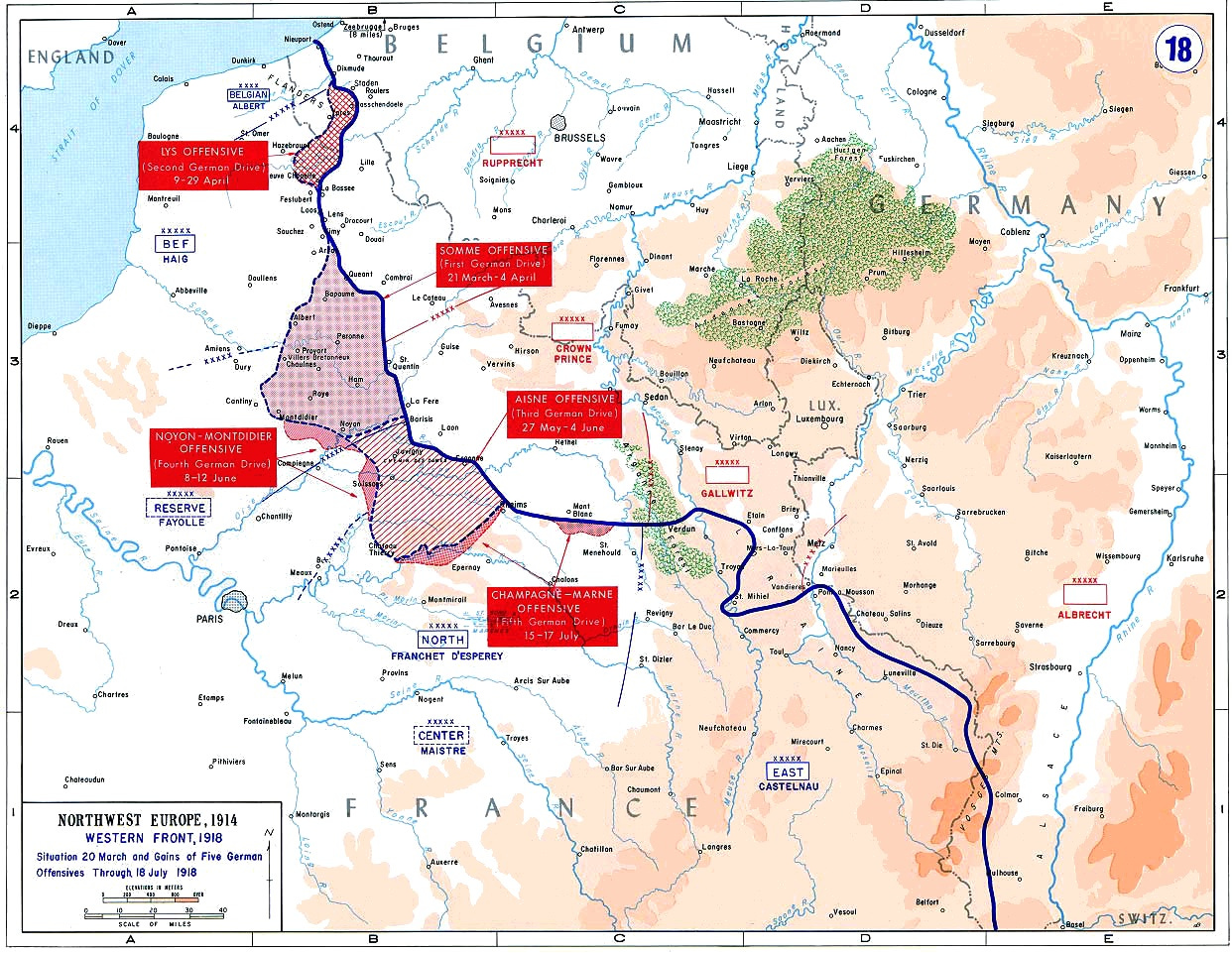
The aim of this war is to reduce Iranian power in the hope that this will, in itself, spontaneously produce a better regional order. Iran has certainly been a malign influence and a reduction of its capacity is—in absolute terms—beneficial. But it is senseless to embark on a costly war with this as an aim without a plan for confirming and exploiting the weakness inflicted.
Book VIII, Ch. 4, pg. 922.
I feel that for Iran, you are neglecting the domestic American variable. If they are able to inflict a greater degree of cost upon the MAGA movement, they may succeed in the short term in giving the Democrats control of both houses of Congress. In the long term, they could potentially cause enough pain that a Democrat is elected President, though backlash to MAGA was already brewing. The Democratic Party was already more dovish towards Iran, especially on it's left flank. A progressive President in particular would cut off arms sales to Israel, and maybe even sanction the country along with the Gulf States, limiting thier ability to attack Iran, and giving the Islamic Republic the time it needs to rebuild its networks. Some of the more radicalized anti-imperialist and anti Zionist elements of the left, such as the influential streamer Hassan Piker, even see Iran as an ally. At the very least, this sentiment would restrain what sort of actions against Iran a democratic administration would allow.