

John Boyd Didn't Understand Clausewitz
Part 1: Aims, Terrain, and the Superiority of the Defensive

It’s no great sin to misunderstand Clausewitz, but it’s no great honor either.
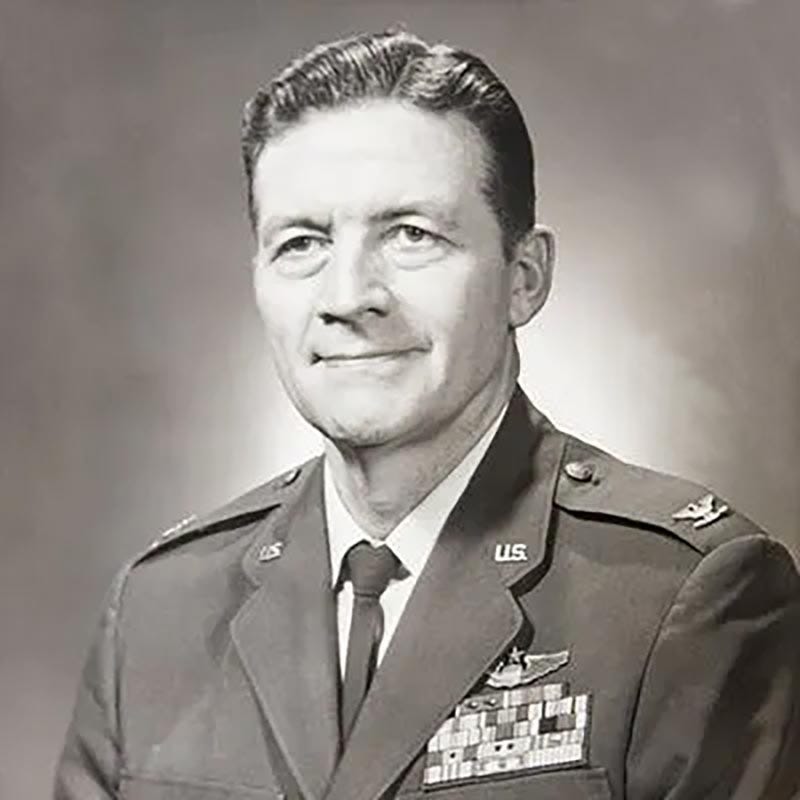
This article is centered around this piece by Ian T. Brown, published in The Strategy Bridge in 2018 (this is the kind of topical analysis you can expect here at Dead Carl and You). The essay draws upon the lectures of John Boyd (1927-1997), an American fighter pilot and military theorist, influential for his contribution to the Energy–maneuverability theory of aircraft performance, and the “OODA loop” concept of decision-making, and relates his comments on Clausewitz’s On War. This article is written not for the sake of criticizing John Boyd, but criticizes him for the sake of preventing the proliferation of his misunderstandings of Clausewitz.
Brown’s essay provides Boyd’s views on Clausewitz with relatively little commentary, with its stated primary purpose being a documentation of them. Brown also writes: “Second, and perhaps more importantly, [the purpose] is to offer it as [a] whetstone to help hone the “Clausewitz says X” approach to contemporary conflict.” The “Clausewitz says X” tendency is a good target for correction, as there are many more Clausewitz quotations that are misleading when deployed out of context than those that are fully self-contained.
We will largely not address Boyd’s ideas here in general, but rather engage specifically with what his statements on Clausewitz reveal about his understanding of the ideas in On War in contrast to what Clausewitz actually meant, largely relayed in his own words. It will be left to the reader to draw their own conclusions as to how this reflects on Boyd’s theories and method more generally. Nevertheless, for the sake of context and completeness, the quotations on Clausewitz from Brown’s essay will be supplemented by reference to his co-authored book on Boyd, Snowmobiles and Grand Ideas, which includes primary sources of transcripts and slides, and can be accessed here.
The Aim of On War
In summary of Boyd, Brown writes: “Overlaying a Clausewitzian framework on the adversary du jour can be problematic, as said adversaries do not always share that strategic perspective.” This framing indicates a misunderstanding of the purpose of On War. Its purpose (as Jon Sumida’s book Decoding Clausewitz emphasizes) is to help officers and statesmen develop the acumen or genius necessary to rapidly judge a situation sufficiently correctly, including the character and style of an adversary. As Clausewitz says quite clearly, “[theory] is meant to educate the mind of the future commander—or, more accurately, to guide him in his self-education—not to accompany him to the battlefield.”
Clausewitz’s aim was to describe war and the tendencies within it in a way that was accurate, and he therefore describes his investigation as scientific. He did not provide a particular lens or perspective, but rather sought the truth of the matter. For example, he claims the political standpoint has primacy as the way to view war because war is essentially political; it would therefore be inaccurate to grant any other standpoint primacy. What this means is that if one wants to take other perspectives on war, one must grapple directly with Clausewitz’s claims of truth. Otherwise, one may easily fall subject to the harsh criticism Clausewitz levied at contemporaries writing on war who offered only a hodgepodge of observations, without making clear the standpoint from which they were speaking, producing advice that was either banal or too vague to be falsified.
Boyd also claims: “If you have a narrowband radio, you can’t examine the other bands, can you? If [the enemy]’s got a wideband, he can examine yours, plus he can operate the other stuff and be hosing you and you don’t even know it…you want the wideband filter. And if you’re only using Clausewitz, you got a narrowband filter through which you’re looking at the world of conflict.”
It is true that, the more widely read you are on theories of war, the more likely you are to be able to understand what assumptions your adversary is operating under. But this view continues to misunderstand Clausewitz: his contribution is an investigation of the nature of war and a method for using this to develop sound judgment in matters of strategy. If your adversary knows you have used Clausewitz’s method, he cannot use it to anticipate your actions with any success. To be Clausewitzian means to know that strategy must be founded on the concrete facts of the case at hand, with theory being merely an aid in learning to do so. An adversary would have much better luck anticipating your actions by doing the same—looking at the particular. Knowledge of other writings may be helpful, but their helpfulness depends on the truth they contain and whether truth and falsehood are correctly identified by the reader. If one reads widely but insufficiently critically, one will easily accumulate nothing but a mass of false impressions.
Brown describes Boyd’s engagement with Clausewitz as follows: “Boyd sought not so much to circumvent Clausewitz as to use the Prussian’s concepts as fuel in his own mental refinery.” Treating the concepts in On War as mere fuel in a refinery does them a disservice, and—more importantly—is an implicit rejection of the scientific spirit of investigation that underlies Clausewitz’s work. This is an error not unique to Boyd. We might say most readings of On War have been of a similar nature. But Clausewitz deserves a more serious engagement by any student of war. He aimed not just at a particular perspective, but at the truth, to whatever extent he in reality succeeded or failed in his task.
This is to say: Clausewitz believed there were truths about war to be found and that he had found some of them. The contention of Clausewitz is that war has an unchanging nature or essence, and observations about this essence are valid for all wars, past and future. The premise and his findings ought to be accepted or rejected by succeeding theorists, not impressionistically used as stimulus. If his theory has failed, one must say so, and argue for what one believes is the essence of war (or else for the impossibility of such a theory).
Returning to the idea of lenses, Brown quotes Boyd as saying: “[if one thought] we’re just going to use Clausewitz as the lens filter to look at the problem, you’re going to make a horrible mistake…because all you’ve told me is your thinking hasn’t proceeded beyond 1832, and a lot of things have happened since 1832.” This is a rather facile criticism of Clausewitz, which again indicates a lack of understanding of the aim of On War. On War most basically consists of two components: a methodology for usefully theorizing about war’s unchanging nature, and Clausewitz’s own findings in his investigation. The enduring fame of Clausewitz stems—not just from his writing—but from the failure of succeeding thinkers to continue in his vein of investigation or to develop upon his methodology. One need not agree with Clausewitz’s method (or one might agree with his method but not his findings) but an appeal to the passage of time is an odd non-sequitur, like a stage magician’s attempt at misdirection. A method of inquiry is not intrinsically invalidated by the passing of time or the occurrence of events. One might as well point out that Carl is dead, and ask the use of taking advice on war from a dead man.
Terrain Troubles
“[Clausewitz] gets in the mountains, which is rough terrain. Then he says offense is the stronger form.”
“Because this crazy notion, that defense is a stronger form, if it is, then how come he says that the offense is stronger in the mountains? And he sort of alludes it’s stronger in the forest.”1
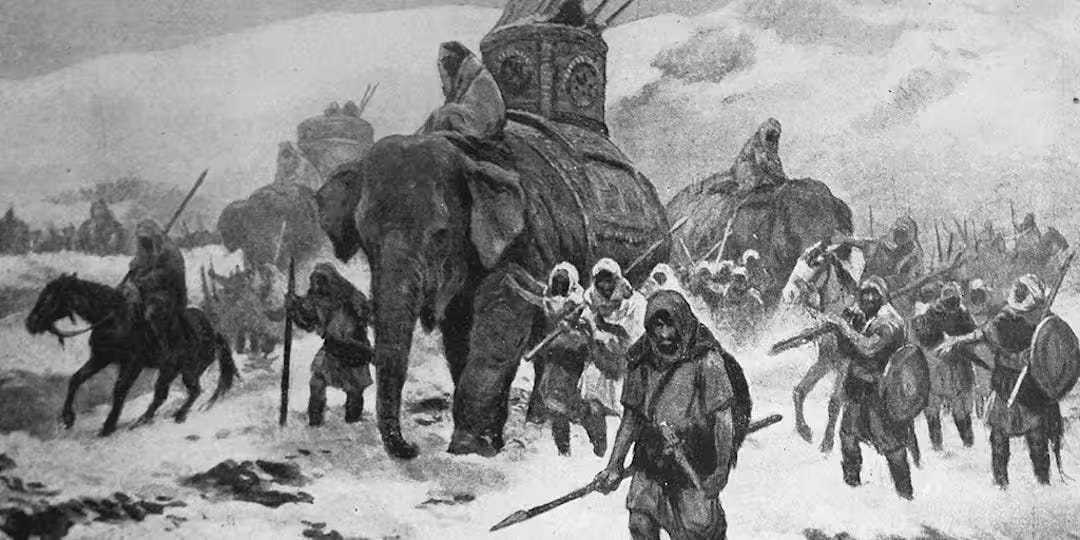
It appears that Boyd is referring to a digression in Chapter 15 of Book VI, where Clausewitz writes, “The attack thus acquired a general superiority, and the defense had no other means to make up for this than by seeking protection from impediments of ground, and for this nothing was so favorable and general as mountainous ground.”2 What Boyd misses is that this is not a general statement, but part of a digression in which Clausewitz is recounting the historical development of tactics and explaining why the convention of defending mountainous terrain was at one point logical, even as it remained popular past its relevance.
The “general superiority” of the attack refers specifically to the advantage of deploying second, in a prior age when armies were both large and unwieldy, causing the defender to more heavily rely on the natural superiority of the defensive that is gained from terrain. He then goes on to explain the further development of tactical practice in mountainous terrain up to the recent past where,
The offensive had once again gained an absolute preponderance through the continuous advance being made in mobility, and it was only from the same means that the defense could seek help. But mountain ground, by its nature, is opposed to mobility, and thus the whole mountain defense experienced, if we may use the expression, a defeat not unlike that which the armies engaged in it in the Revolutionary War[s] so often suffered.
In its context, this is clearly not commentary on the overall relationship between attack and defense, but about the traditional use of mountains in tactics and how useful they are for the defender. Clausewitz argues that mountainous terrain is unsuitable for a defender who is intending to fight a decisive battle. This is in no sense contradictory to the idea that the defensive is the stronger form of fighting. Indeed, the defensive—as Clausewitz defines it—has the significant advantage of choosing the ground on which it intends to fight. It is only natural that some terrain suits it better than others and Clausewitz wishes to warn the reader not to be taken-in by then-conventional ideas about the utility of mountains.
The topic ends with the isolated line, “A general who gets himself into disaster in an extended mountain position deserves to be court-martialed.”3 His point being that the extended mountain positions that were fashionable tools of the defensive in the 18th century are inappropriate for war with modern, mobile armies. It in no sense follows from this that Clausewitz was saying the offensive is stronger than the defensive in mountains, but that the defender who chooses mountainous terrain to fight a defensive battle is making a mistake that nullifies some of his own advantages. The defensive is still stronger but to a lesser degree.
Returning to the other instance Boyd cites, “Then he gets in the forest, and he’s a little bit more clever. I read that very carefully. He’s sort of saying the offense is the stronger form, but he couldn’t say it.”
It is less than clear what Boyd is referring to here. A possibility is Clausewitz’s comment, that, “The defender has more need than the assailant of an unimpeded view all around him, partly because, as a rule, he is the weaker, partly because the natural advantages of his position cause him to develop his plans later than the assailant.”4 Or perhaps Boyd is referring to the assertion that “Such a wooded country cannot, therefore, be brought into any sort of favorable relation to the defender’s engagements…” Clausewitz then mentions a couple of uses for the kind of cultivated forests he is talking about for the defender’s maneuvers, but his overall point—as with mountains—is that these features of terrain are not strong ground from which to fight defensively.
In either case, Boyd’s error seems to be that he assumes what Clausewitz calls a “true polarity”5 applies in real war. Thus, Boyd assumes that because it is disadvantageous for the defender to fight in woods and mountains that this terrain is therefore advantageous to the attack, and indeed gives it an overall superiority over the defense. This is not the case, as an advantage omitted by the defender does not automatically create an overall advantage for the attacker. Clausewitz assumes throughout Book VI that the defensive is a form of fighting relied upon out of weakness (an imbalance in force). Thus, the defender seeks to make use of the advantages of that form of fighting (waiting and terrain) to overcome the superiority of the attacker’s forces. It is in this context that he is explaining why—counter to then-conventional wisdom—the direct defense of mountains and forests is not a productive use of the advantages of the defensive.
These may seem like nitpicks on Boyd, but he chose to decontextualize comments in these chapters, which were concerned largely with tactical questions of warfare in Clausewitz’s day, and assert that they contradicted one of his main theses: the superiority of the defensive. This misunderstanding of Clausewitz’s assertions regarding the two forms of fighting leads to further errors in interpretation, as we will now see.
The Offensive and the Defensive
“So therefore, if it depends upon the situation, then you say, why do you say it’s a stronger form? The stronger form depends upon what’s the situation. Whether you’re going to use the offense or defense depends upon the situation. But [Clausewitz] didn’t say it that way, because he had to have an absolute notion. That’s horseshit. Even in his own book, if you read carefully, he’s got it wrong.”6
A moment’s consideration shows how Boyd is entirely missing the overall point that Clausewitz is asserting: that the defensive form of fighting is an overall strengthening factor. That the defensive is the stronger form of fighting does not mean defending is always the better thing to do, as Boyd implies Clausewitz’s position to be. The caveats that Clausewitz attaches to his observations, the particularities from politics, chance, and friction, etc. must always be held in mind when considering his assertions, so as not to mistake tendencies for laws.
That the defensive is the stronger form of fighting does not imply a positive doctrine of applying it universally, which would be self-evidently absurd. “Whether you’re going to use the offense or the defense depends on the situation” is not incompatible with the notion that the defensive is the stronger form of fighting. The defensive, in the sense Clausewitz means it, is not merely passively awaiting the enemy attack, but involves the use of the attack, just as the offensive form of fighting also intermixes the defensive.
But as we must return the enemy’s blows if we are really to carry on war on our side, therefore this offensive action in defensive war falls in a certain sense under the heading of defense… We can, therefore, in a defensive campaign fight offensively, in a defensive battle we may use some divisions for offensive purposes, and lastly, while simply remaining in position awaiting the enemy’s onslaught, we still send offensive bullets into his ranks to meet him. The defensive form in war is therefore not a mere shield, but a shield formed of skillfully delivered blows.7
With this in mind, Boyd’s other comments on the subject make it difficult to escape the conclusion that he did not understand what Clausewitz meant.
As Brown summarizes, “‘And later on, Clausewitz comments on morale, arguing that “if you got more morale and the other guy’s got less, it also may be the offense may be stronger,’” and “From these apparent contradictions, Boyd determined that what Clausewitz was ‘really saying then, the offense or defense, whether one’s stronger than the other depends upon the situation, whether it be terrain or people and that.’”
To this we can counterpose Clausewitz’s plain language, “What is the object of defense? To preserve. To preserve is easier than to gain; from which it follows at once that the means on both sides being supposed equal, defense is easier than attack.”8 Again, whether or not to attack depends on the situation, but the defensive remains the stronger form of fighting. The attacker may have an easier time attacking in rough terrain than in flat terrain, but that does not give the attacker an overall advantage over the defender. “Less advantageous” is still advantageous, in the same way that two is less than three but still greater than one. Boyd simply doesn’t address these comments, which fully explain the contradiction he perceives.
The issue here is not that Boyd contradicts Clausewitz, but that he does not engage with or acknowledge Clausewitz’s arguments. Instead, he presents Clausewitz as claiming that the defensive is always the better course of action (an implausible position), and claims that this not being so in every case disproves Clausewitz’s notion.
Discussed at length in Snowmobiles and Grand Ideas, Boyd’s counter-example for the superiority of the defense is the testimony of Hermann Balck, a Nazi general who successfully took the offensive when outnumbered, inflicting heavy losses on Soviet offensives. “in Balck’s cases, he said there’s no way I can defend with three divisions. I’m going to get cleaned. So he got a surprise attack, cleaned up the attack.”9 Putting aside the problems that come from relying on this kind of evidence,10 one has to wonder: did Boyd really believe Clausewitz had never considered the counterattack? It is true that Balck won tactical victories despite being outnumbered, but he nevertheless had the “stronger” force in Clausewitizian terms. The error here is that Boyd chooses to interpret “strength” in this instance as a numerical matter. Clausewitz, meanwhile, refers to the overall strength of a force, including its subjective factors, like morale, experience, and organization.
The idea that this very conventional example counters the thesis of Book VI (the longest of On War) betrays a lack of serious engagement, as indeed Chapter 5 of this very book shows:
If the defender has gained an important advantage, defense has done its part, and under the protection of this advantage he must return the blow if he does not want to expose himself to certain ruin… A swift and vigorous transition to attack—the flashing sword of vengeance—is the most brilliant point of the defensive. He who does not bear this in mind from the first, who does not from the first include it in his conception of defense, will never understand the superiority of the defensive.11
Documentary evidence shows Boyd read On War, yet one cannot help but suspect that he found the opportunity to use Clausewitz as a foil more appealing than accurately representing his views.
This article was written as a single piece, but is truncated for this format of publication. The second part, addressing absolutes, the Schwerpunkt, mass, and speed and concentration, can be read below:
The Further Misconceptions of John Boyd

This is the second part of my commentary on John Boyd’s presentation and criticism of the ideas of Carl von Clausewitz, continuing directly from where the first part left off (linked below).
Snowmobiles and Grand Ideas, 275.
On War, 699 (Note that these page numbers refer to the “Book of War” edition of the Jolles translation, and so will differ in numbering and phrasing used from the more standard Howard and Paret).
Book VI, Ch. 17, 717.
VI, Ch. 21, 742.
The idea of polarity and the reasons it does not apply is discussed in Book I, Ch. 1.
Snowmobiles, 274-275.
VI, Ch. 1, 618-619.
ibid.
Snowmobiles, 275.
Memoirs are of dubious reliability at the best of times, and an officer of a defeated criminal regime had more incentives to lie than most, particularly considering the inaccessibility of Soviet archives against which claims could be referenced. The post-war embellishments of the German geniuses have been well-documented. See The Myths and Realities of German Operational Art by Gerhard P. Gross for an overview.
You are absolutely right, he didn't. I met John Boyd at Air University in the early 1990s to discuss Airpower Doctrine with him and others. It was apparent early on that he was a "true believer" and knew in his fighter pilot's heart that airpower could singlehandedly win a war if only they were allowed to get inside the opponent's OODA Loop. Anything contrary to that conviction was quite simply wrong.